Ugh. Exhuming the food compost

potatWe’ve hit the peak of summer food production. Every meal is centered around apples, green beans, lettuce or kale and I am investigating new and exciting ways to sneak zucchini into most recipes. I’ve been making a variation of Szechuan green beans; instead of sauteing the beans, I have been coating them with olive oil and roasting at 425 degrees for about 20 minutes until they are wilted and starting to brown, and then tossing them in a sauce from the Inquiring Chef.  This recipe tastes great and uses up pounds and pounds of green beans.

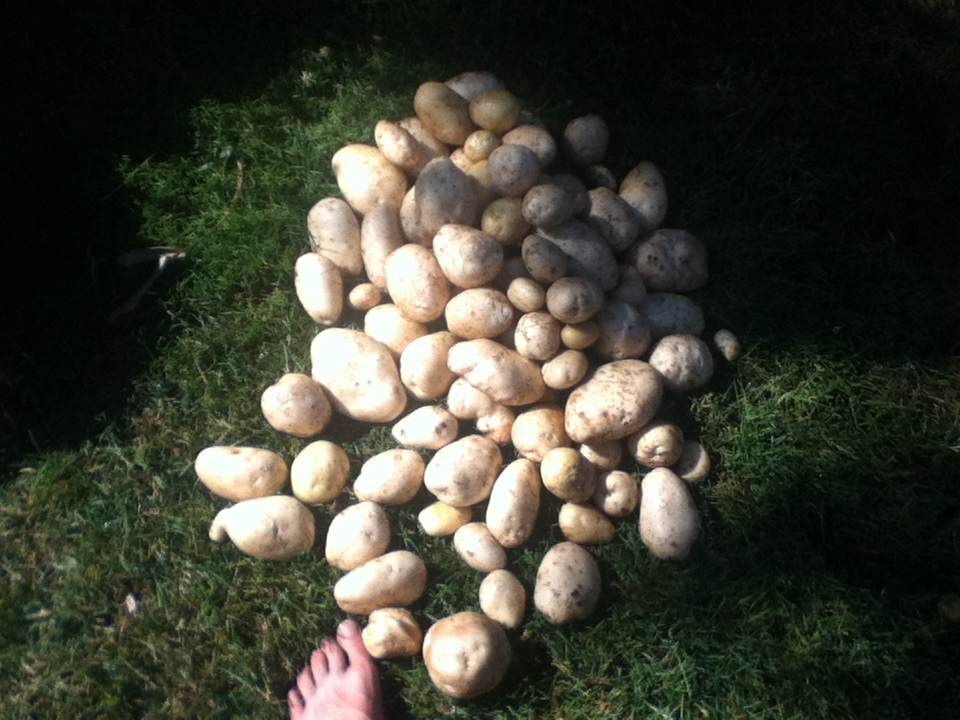
This weekend Small Guy was especially productive in the garden and dug out all of the remaining Kennebec potatoes (above). We’ve been eating potatoes for the last two weeks, mostly chopped up and roasted as pan fries. This variety produces very large smooth potatoes with very few blemishes.We will be planting this variety again next year.

Small Guy also has a special affinity for compost, and every year he volunteers to dig out and sieve the garden waste compost (note that he is well compensated for this task). In the last month he produced six large garbage cans full of compost which we’ve been using in the garden boxes. Today he tried to dig out the bottom section of the food compost bin as it was almost full. Our City of Vancouver issued round black compost bin is one of those that you assemble in situ, fill from the top and are supposed to empty from the sliding door near the bottom. The compost bin had sunk below the level of the rest of the yard, so Small Guy had to dig down to access the sliding door. When he tried to dig out the compost, he ended up bending the compost bin and it snapped apart along the middle and the half-rotted food spilled everywhere.

Okay, that paragraph doesn’t really describe how unpleasant the situation was. I don’t think I have the right balance of “green” and “brown” compost materials in the food compost. Although the stuff near the bottom contained lots of worms, it was also very wet, putrid and dense. It was hard work to dig up. I layered the material in the newly emptied compost bin with branches, leaves and other stuff from the unfinished garden compost bin.

The good news was that there was very little garbage mixed in with the food waste (in previous years I found lots of corks and spoons and other small items), very few fruit stickers (my nemesis!) and no massive undigested items like avocado shells and  pits.  In the end I covered it all with a tarp and bricks so hopefully it will be “done” by next summer.

Other garden activities this week:

  • The little sorrel that I planted last fall has taken over about a quarter of one raised bed. I dug it up this weekend and replaced it with a bay laurel and two tarragon plants.
  • We added two bags of manure and two bins of compost to raised bed #4, and covered it with a tarp for the winter. This bed will be used for favas and peas early next spring.
  • The winter garden was planted. From east to west, one row each of cabbage (providence savoy), red russian kale, vates blue curled scots kale, lacinato kale. Two rows each of silvia lettuce and rouge d’hiver lettuce. And one row of wild arugula.
  • The poppies and sweetpeas from the front garden are almost finished and I am trying to pull out the dried plants without damaging the cosmos which have grown up around them. Next year I might try to pull up the poppies early as they were the plants that interfered most with the sweetpeas, and pulled everything over when they fell over.
Posted in Uncategorized | Tagged , , | Leave a comment

Zucchini count 2013 is on!

zLate last week I started to pick green beans and zucchinis. My beans were late compared to most of my friends, but now I am harvesting a large bowl every day. Beans are one of the things that I do like to blanch and freeze for the winter so I am going to start that soon.

This summer my plan is to “pick ’em young” and harvest both zucchinis and beans when they are small and tender. This requires some vigilance, so I am trying to get out there every day. I had my first small zucchini last Friday, we ate three more on Monday, and there are a few ready to pick today.

My big lesson (again) this year is: Give plants enough space. My cucumbers, zucchini and squash were all planted too close together and are not only competing with each other for space, but are crowding out the nearby chard, carrots and leeks. I made a super simple trellis with four bamboo sticks for the cucumbers and some of the plants have started to climb.

Other updates:

rainLast night it finally rained after more than six weeks of straight sunshine. The trees and grass have suffered in the heat so I hope it rains again soon.  Everyone hates when I say that, but I do like the rain.

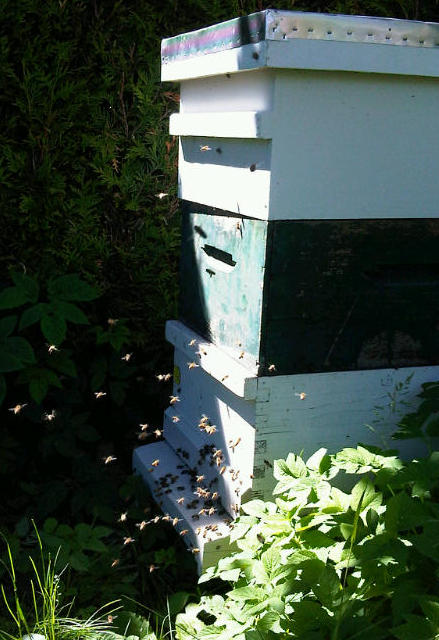
The hive is “stagnating”. Two weeks ago Bryn added a new honey box because the other one was almost full. Yesterday he came by and the old box was still only 80% full and the new box was still empty. So he removed the new box with the hope that the bees will finish filling the old box. Although he didn’t see the queen, he saw lots of eggs and larvae.

This has been a great year for beets, chard and kale.

Posted in Uncategorized | Leave a comment

Small Space Garden Guru

Pathway through front yard to vertical garden area- can see the pallet just to the top right

Pathway through front yard to vertical garden area- can see the pallet just to the top right

An advantage of having limited gardening space is that it forces you to be very efficient and creative in how you use what you have. The opposite can also be true.  In my case I have a lot of neglected or unresolved areas that don’t get enough care or attention, and every time I walk by these spaces I cringe and think hopefully, “hmmm, maybe next year”. (Okay, enough about me and my garden). One of my inspirations this year has been my friend Megan, who recently sent photos of her fabulously well organized garden. Here are three things that she’s done to make me think differently about my own space.

(1) Choosing plants wisely 

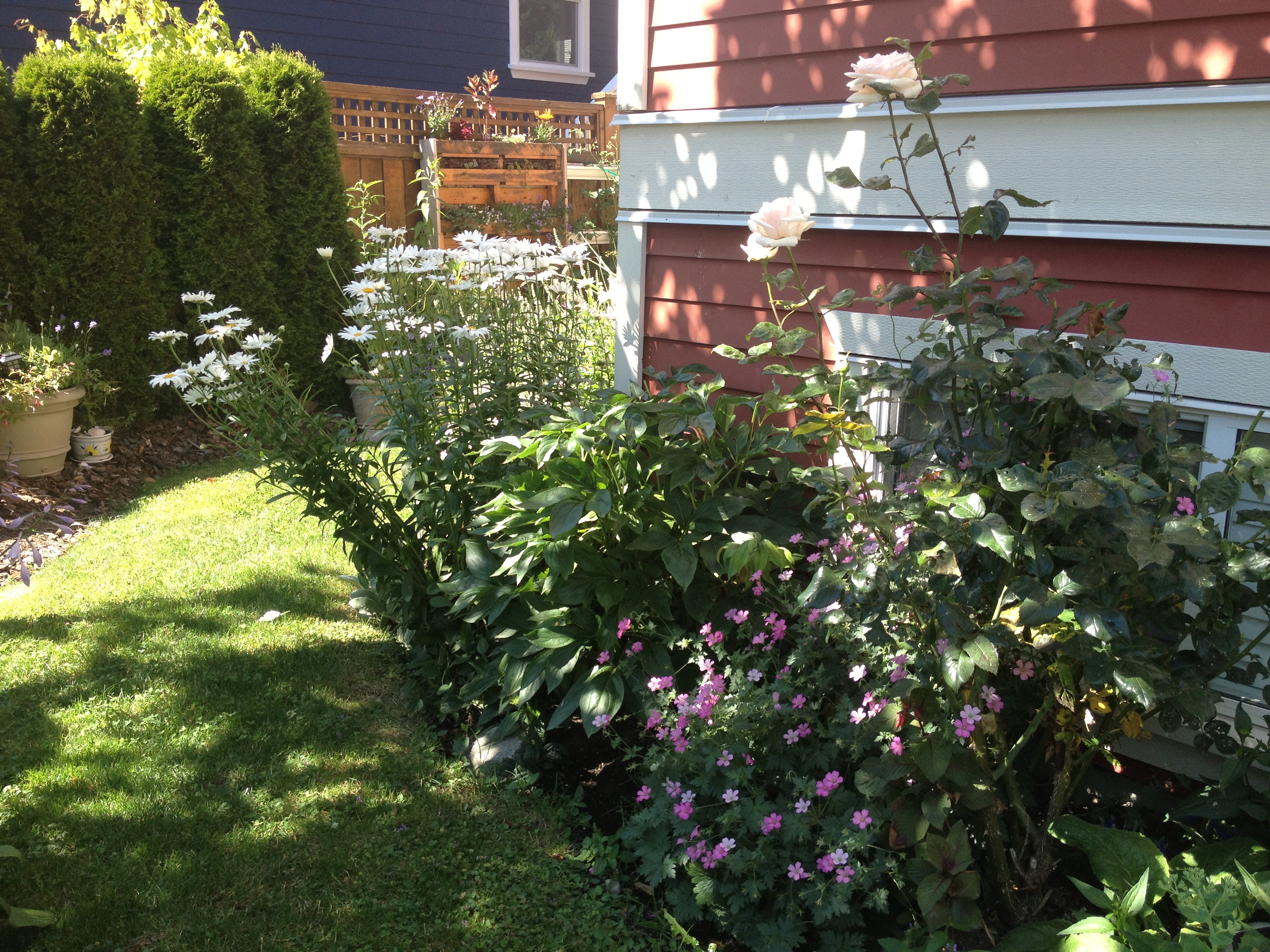
In the picture above, you can see that Megan has used a variety of plants make a nice transition between vertical walls (houses, hedges and trees) and the horizontal grass. This is super important if people are going to be walking right beside your building. She has added an intimate seating space in the corner and has used trees and hedges to create shade, has play space for the kids and still managed to add in lots of gorgeous flowers.

IMG_3149

Everything filling in nicely. View from front gate

(2) Going vertical

Megan converted her sunny fence space on the side of her house into a green wall. I love how she used this for both food and flowers.

View of Megan's green wall from her kitchen door. There is a pallet garden to the far left, tomato plants and a gutter garden near the top of the fence.

View of Megan’s green wall from her kitchen door. There is a pallet garden to the far left, tomato plants and a gutter garden near the top of the fence.

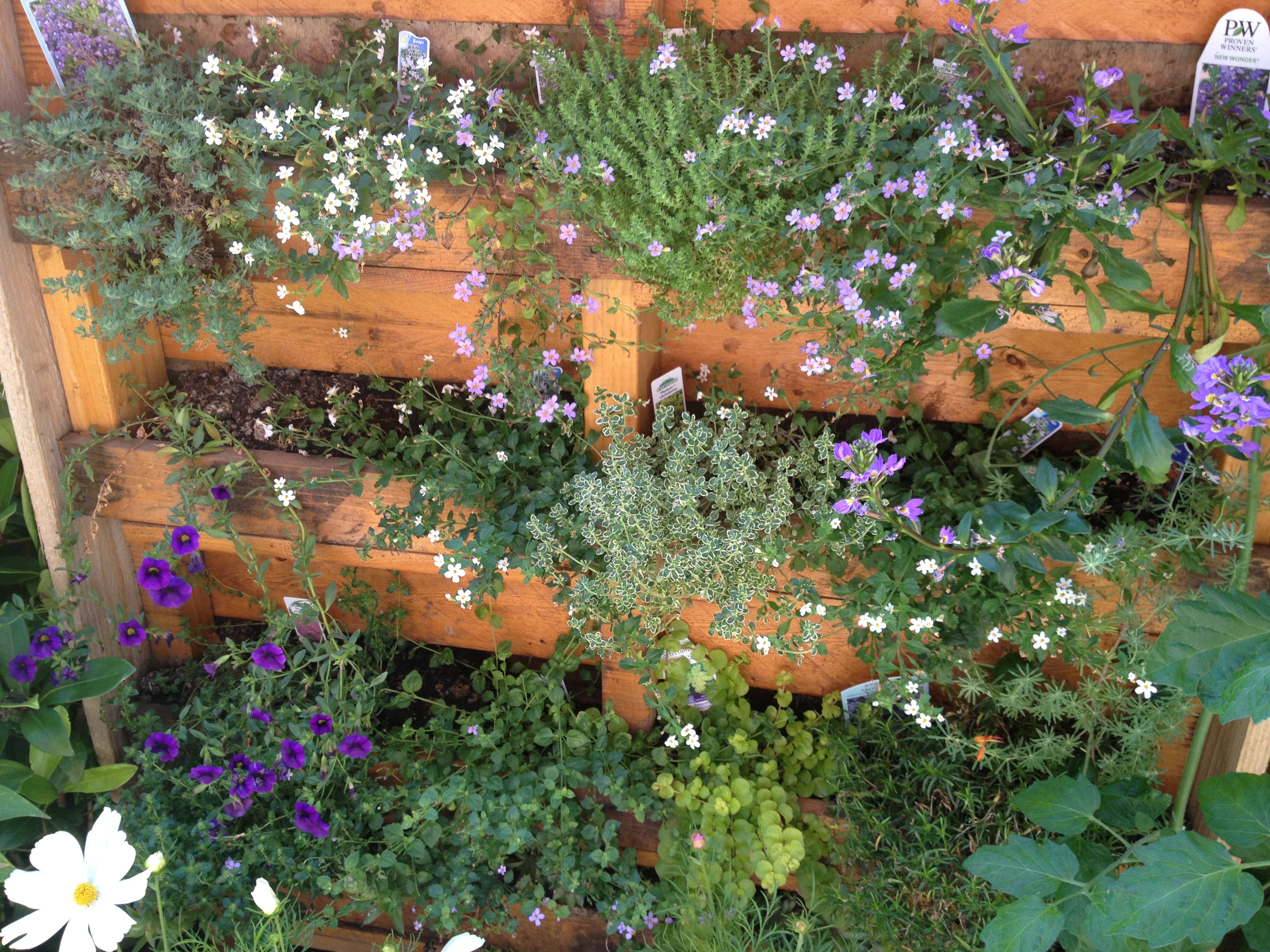
One of the things that I am super excited about is Megan’s pallet garden. Instead of covering it with landscape fabric and filling it with dirt, Megan used the pallet to make shelves, which she planted with flowers and herbs. Gorgeous!

Close up of the garden pallet/ living wall

Close up of the garden pallet/ living wall

3) Getting super creative with a gutter garden

And my favorite: Megan’s “gutter garden”. How cute is this?  She purchased gutter materials from the hardware store, mounted them on the fence and filled them with dirt. She has two gutter gardens; the top one is a lettuce nursury and the bottom is for herbs. The herbs are being crowded out by the tomatoes but she will swap them next year.

Megan's herb garden in the gutters. They are being crowded by the tomatoes. She used the top row this year as a lettuce nursery. Will swap next year.

Megan’s herb garden in the gutters.

I should mention that Megan doesn’t just confine her gardening activities to small spaces: she currently coordinates an elementary school’s gardening activities, which include 15 large raised beds.

Finally, Megan asked me to mention her fabulous husband, Rob, who has instrumental in supporting her gardening efforts this year. Thanks Rob! And thanks Megan for all the inspiration and for sending the pictures!

Posted in Uncategorized | Leave a comment

(More) Poppies and Sweetpeas

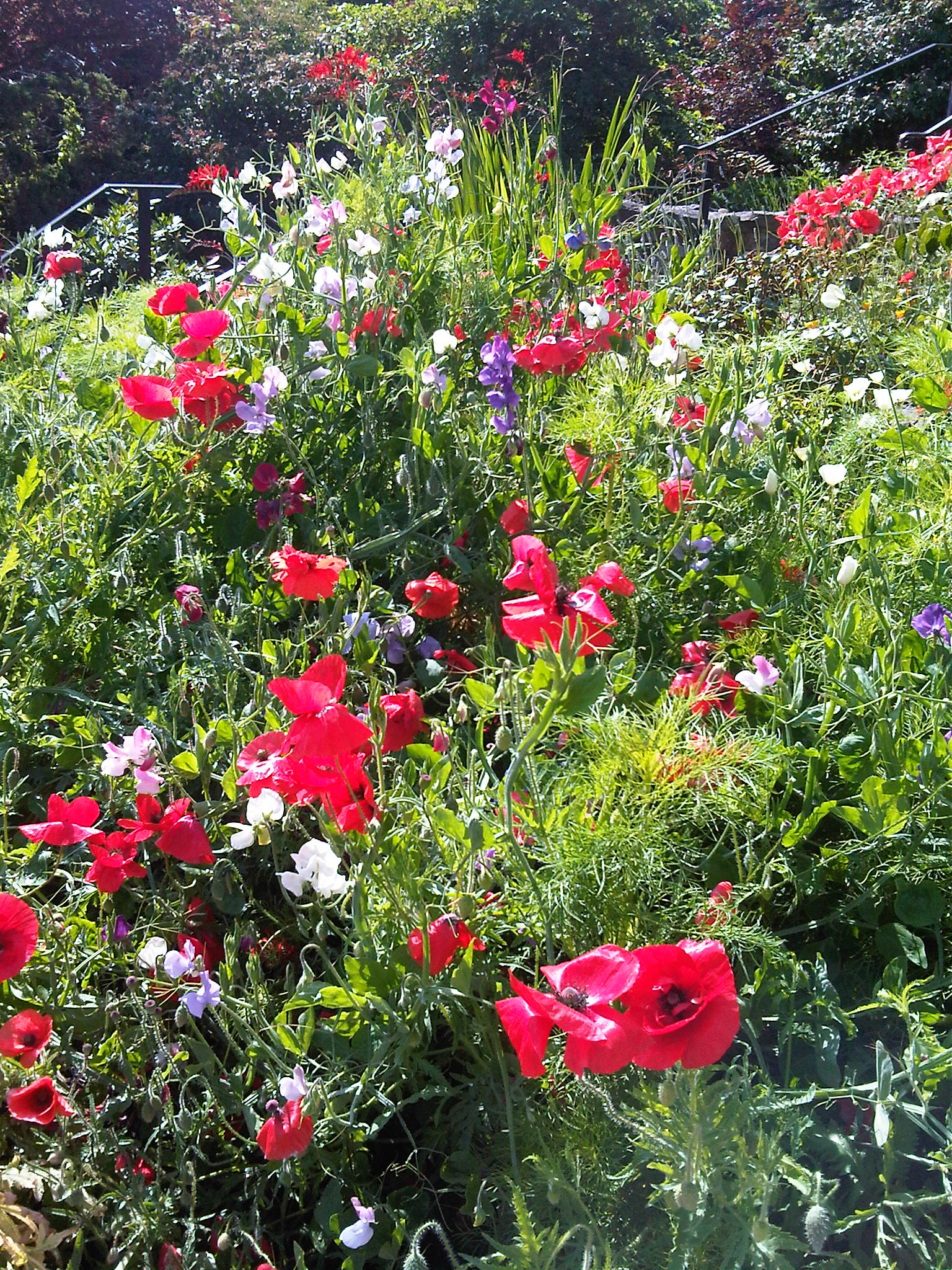
P&S The garden is going wild. Most of the California and Icelandic poppies are finished, the red poppies all still in full glory and the Shirley Double Mix poppies are starting to bloom. The sweetpeas are bursting with fragrance, and the first of the cosmos are starting. Wave after wave of nasturtium and calendula are coming into bloom only to be consumed in salads. The flowering parts of the yard are a crazy mess…just the way I like it.

And for veggies: The favas are almost finished; I think we have one more large serving. Lettuce, kale and chard are still growing like crazy, and I’ve been pushing bags of kale on my colleagues. In the last day or so, some of the beets started pushing their tops up out of the soil – whats that about? I was going to harvest and roast them all this evening until The Man pointed out that a skunk is lurking outside the back door.

I was going to blog about a friend who has a gutter garden as well as a pallet garden, but that will have to wait until I have some more pictures from her…

Posted in Uncategorized | Tagged , | Leave a comment

Aggressive Kale Management Strategy 2013

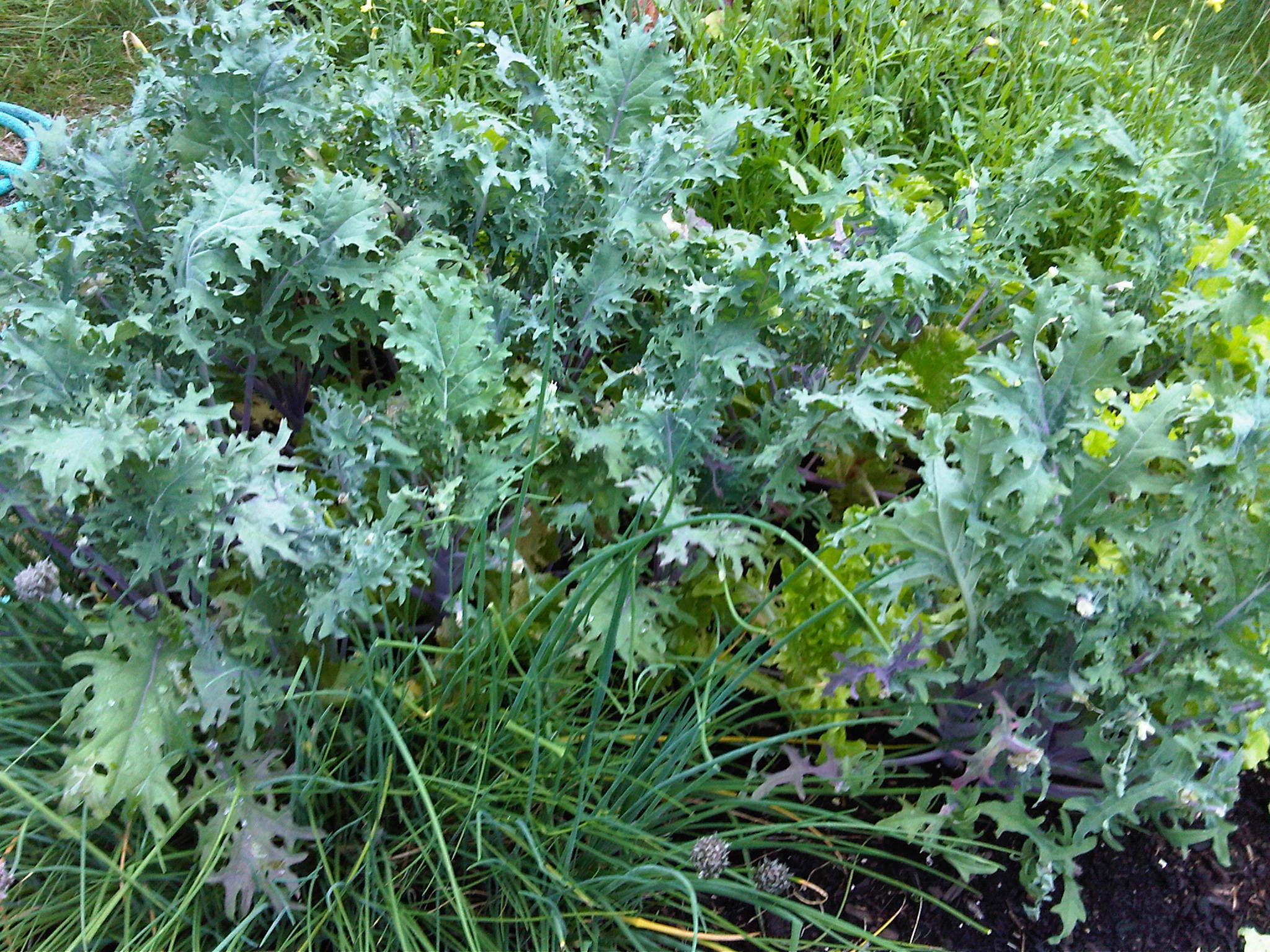
AFTER harvesting a huge bag of kale. The kale is shading out the chives, lettuce and arugula.

AFTER harvesting a huge bag of kale. The kale is shading out the chives and lettuce. The arugula in the background is shading out the beets.

I’ve started to pack ziplock gift bags of raw kale or arugula with me every time I go out to meet clients. Not for my own personal consumption, the gift bags are part of my aggressive new kale management strategy. Many of my clients and a few of my friends have accepted the bags; I have no idea if they consume them. Here are 5 reasons that I am sharing the kale love this year:

  1. Kale apparently fights cancer.
  2. Picking it young keeps it tender, because old kale gets tough and strong.
  3. Late in the summer kale gets aphids, rots and then the whole plant needs to be pulled out.
  4. Eating frozen kale in the middle of winter has zero appeal (trust me).
  5. I am trying to keep the kale from shading out the lettuce and other plants.

I am heading into my office job this morning with a big arugula salad for lunch and a baggie of arugula for my vitamix-owning colleague.

………………..

Other garden stuff:

  • The Man bought an awesome new pump which he used to fill all seven of the rain barrels at the back of the yard. Now that it is so hot, I have been waking early and watering everything when it is still cool.
  • Many of the lettuces and the arugula are starting to bolt, so I have been trying to harvest them just before they start to flower.
  • The first of the fava beans are ready and will be harvested for dinner tonight.  I am going to try to freeze several bags again. Unlike frozen kale, the frozen fava beans were fabulous in paella and soups.
  • The potatoes are doing much better than last year, and the plants themselves are very robust and starting to flower.
  • Raspberries are hitting their peak, although not all of them are as sweet as expected.


Posted in Uncategorized | Tagged , , , , | 2 Comments

Reposting Pat’s blog: Awesome organic weed killer from TastyLandscape

It’s super hot out. I like Spanish hot weather because it means I am either sitting on a deck or on a beach, holding a glass of cold sangria poured by one of my handsome amigos. I don’t quite have the same princesa movie-star life here in Canada and as a result, hot weather usually finds me working hard in the kitchen/house/garden to keep things moving along.

Just now I logged onto my computer and saw this great post from PatSquared, one of the blogs that I follow. So, instead of blogging in the heat, I am going to direct everyone to her awesome post.

Awesome organic weed killer from TastyLandscape.

This solves my huge problem about what to do to kill weeds. Now that I have the bees, I don’t want to use any chemicals or roundup.  So, I am going to make some ice tea, have a siesta and then I am going to make a big batch of natural weed killer and get to work…

Posted in Uncategorized | Leave a comment

Plants that have fallen and can’t get up

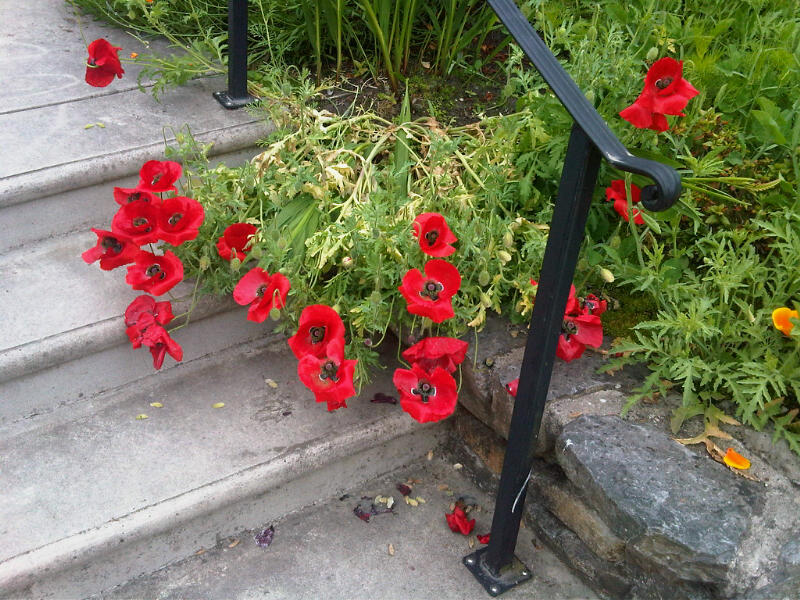
Falling over poppies

Poppies that have fallen and can’t get up.

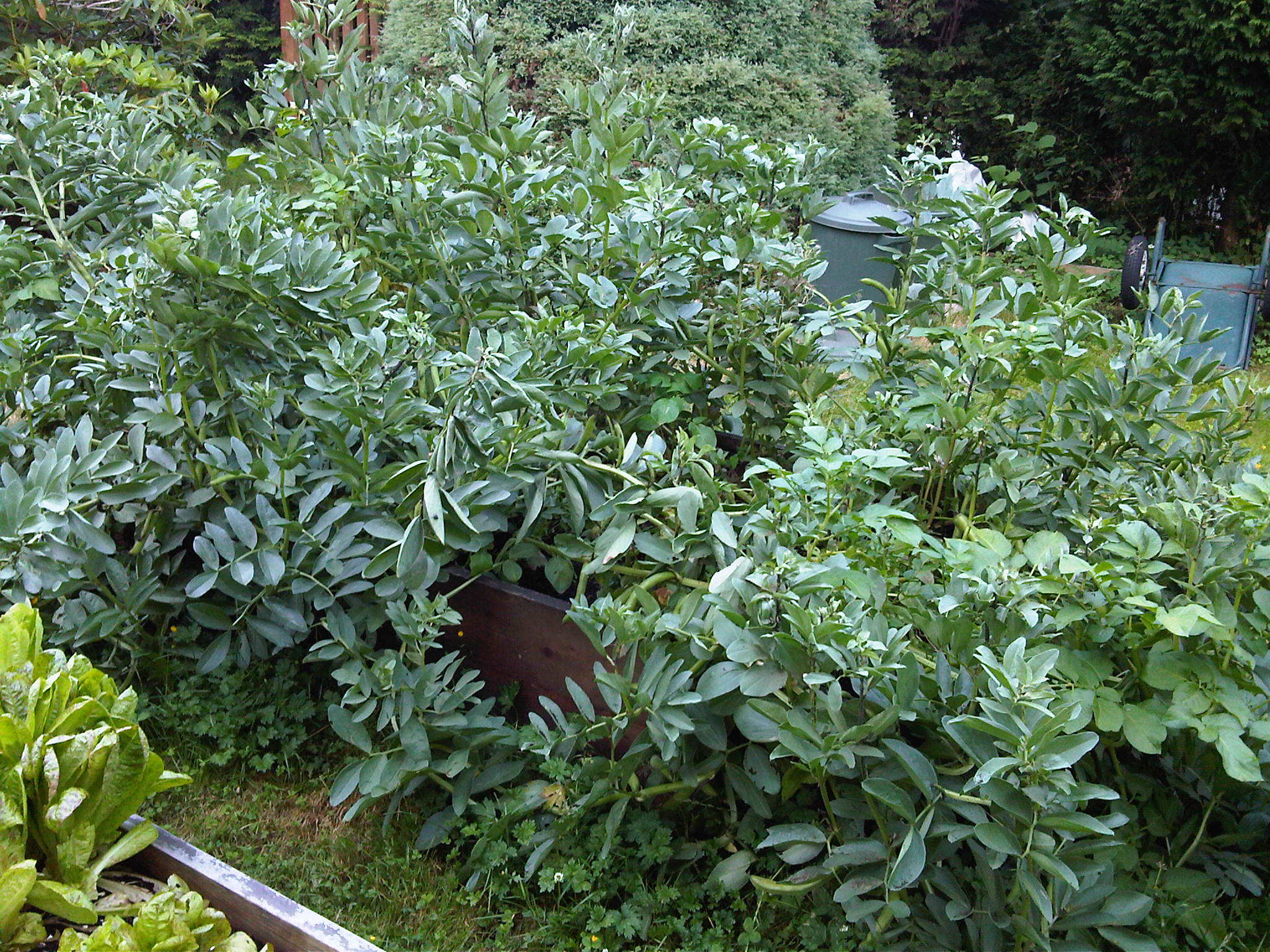
Last year my favas were planted in crappy soil, grew to over 6 feet tall and didn’t require staking or support. This year, they are planted in one of the garden boxes, and even though they are only three feet tall, they have started to fall over.  The first few to fall snapped off at the roots (boo!) but now most of them are leaning against each other and bean growth continues. I am not sure why this is  happening, because these are the same type as last year (Windsor), they are not heavier than last year as the pods are still quite small, and  they are getting enough water.

I’ve noticed this happening with my poppies too, especially the red ones. Mostly they continue to bloom, the leaves turn yellow and then they break off completely and I have to remove the plant. Luckily the bed is overcrowded (hmmm…maybe that is the problem) so another plant expands and fills in the space.

One of my friends had a similar problem with her houseplants; the plant itself was vibrant and healthy, but because the nutrients were unbalanced, the roots didn’t develop and her houseplants would die. I am wondering if the same thing is happening with my plants…

Feel free to send me any suggestions for what might be wrong, and advice for fixing it….

fava

Favas that have fallen and can’t get up. Note that several potatoes grew in this bed as well: leftovers from last year!

Posted in Uncategorized | Tagged , , | Leave a comment

The hive is doing well

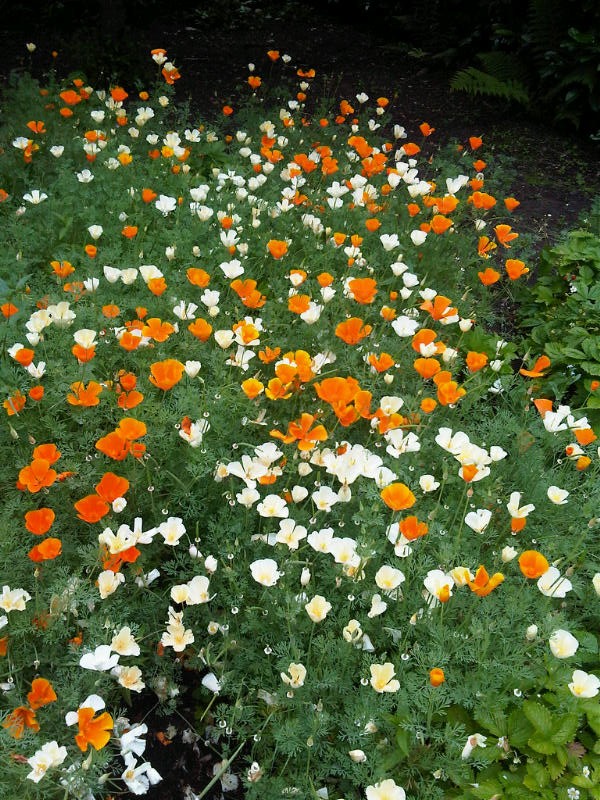
These California poppies are taking over the front yard.

These California poppies are taking over the front yard, and I’m not going to stop them.

Last week summer arrived and so I let my OCD run rampant and I weeded like crazy.  My highly incentivized team of weed removal experts helped out with the lawns and the weed wacking, and the garden looks fabulous. Just as well that it is finally raining, so that I can take a break from all the hard work and blog about everything.

bees

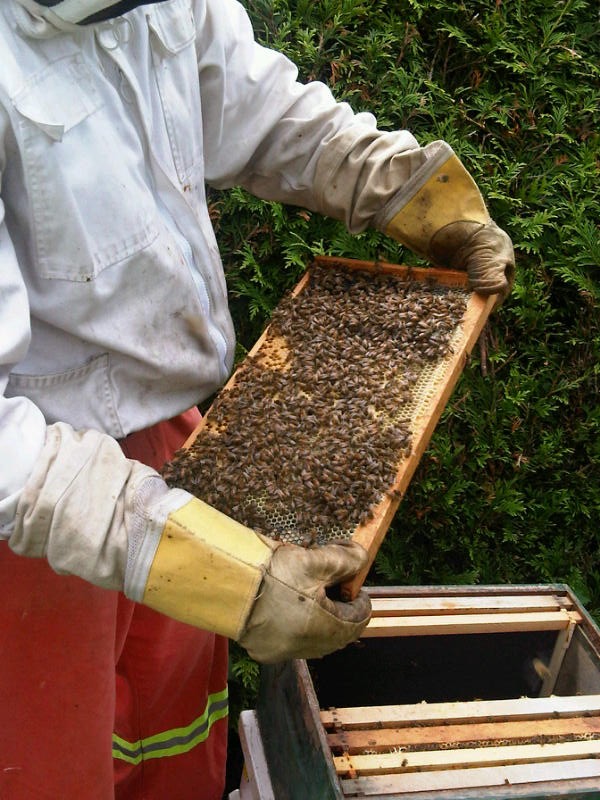
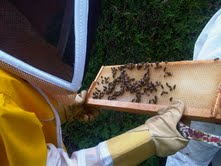
Inspecting the frame.

Bee man

Small Guy holding a frame

On the weekend, Art and Bryn stopped by to check on the hive, and so Small Guy and I suited up to look into the hive. These bees are quite docile, so even when we opened up the hive and started to pull out the frames, they seemed pretty calm. As we took out and inspected one frame after another, the bees were flying around us in a big cloud, and I hoped that my neighbor – who was playing with her dog on the other side of the eight foot cedar hedge – wasn’t noticing the extra bees.

Art and Bryn checked the honey production, looked for the presence of the queen, larvae and looked for anything unusual. There were a few strangely capped cells, so they removed the contents and put them in a bag for laboratory testing. Overall, the hive is thriving.

Posted in Uncategorized | Tagged , , | Leave a comment

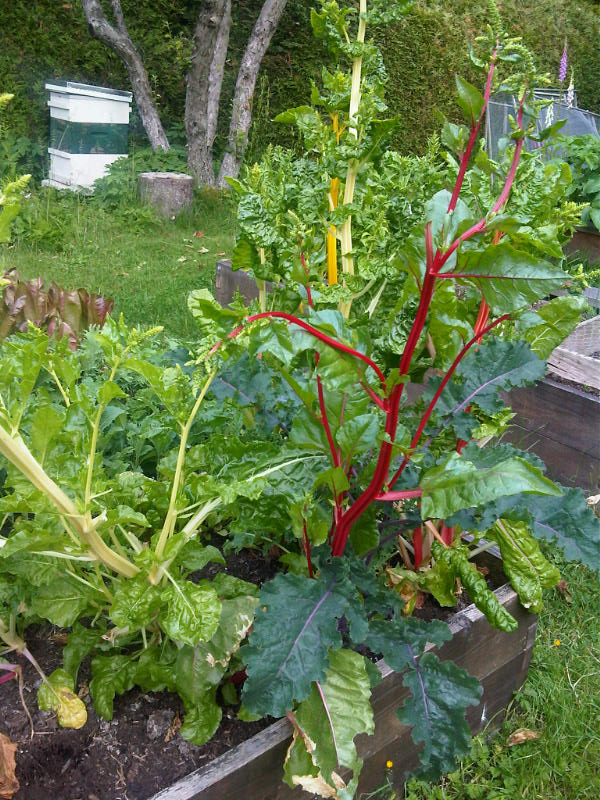
Harvesting the Swiss Chard Forest

One thing I notice about some of my over-wintered vegetables, is that they are very quick to bolt. My over-wintered Swiss Chard was doing well for about two months and all of a sudden it grew more than a metre and started to go to seed.

BEFORE: Swiss Chard and kale, getting totally out of control

BEFORE: Swiss Chard and kale, getting totally out of control


On Monday I had an email discussion with one of my gardening friends about letting vegetables go to seed. What if we just left the vegetables alone to self-seed?  I love the thought, but in practice it may not work as well as expected, with some of the faster growing species (like pac choi or arugula) taking over.

My Swiss Chard and the two kale plants left-over from last summer were starting to block the sun, so this morning I pulled everything up and harvested the leaves. I ended up with much more vegetables than expected and ended up pushing big ziplock baggies of greens on my colleagues.

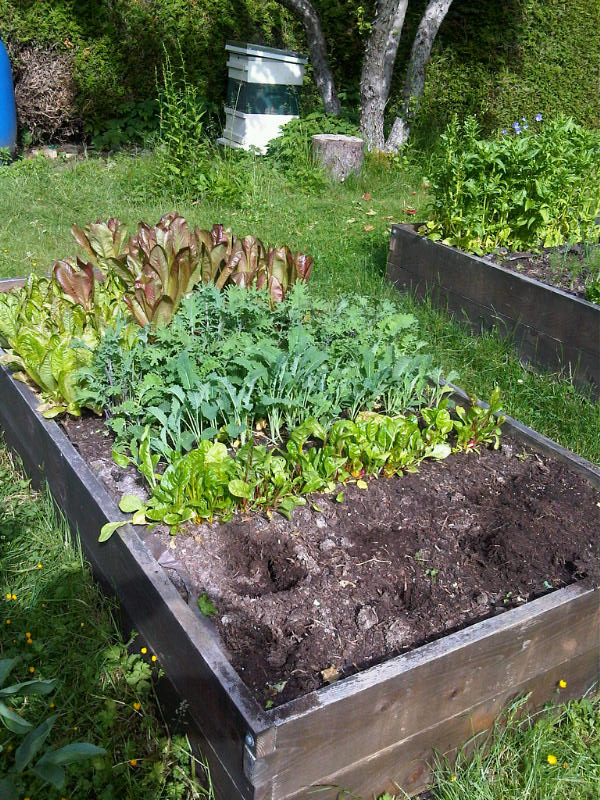
AFTER: the baby swiss chard, kale and overwintered lettuce are all happy to see the sun!

AFTER: the baby swiss chard, kale and overwintered lettuce are all happy to see the sun!

One thing that was surprising was how dry the soil was after removing the plants. Maybe this explains why some of my fava beans are falling over (they didn’t last year!). I watered everything very well, then dug about 15 pounds of manure into the bed. I planted “sweet slice” cucumbers and “mammoth” dill in the newly liberated space.

On the very right hand side of the picture above, you can see my overwintered spinach which is also going to seed. I am trying to keep it going until we’re ready to eat it; based on the number of veggies I already have in the fridge, that may be several weeks. At this point in the year I not only push vegetables on everyone that I meet with, but start to cook everything in a way that reduces vegetable  volume, so that we consume the maximum possible amount of vegetables per serving.

Today I also replanted some more carrots around the leeks. Apparently leeks help to repel the carrot root fly, a problem that I had last year. The original batch of carrots was planted in the trench with the leek seedlings, but was then selectively consumed by slugs or other insects. I don’t  know if planting the carrots around the maturing leeks will work, but I might as well try.

Other stuff:

  • Small Guy’s squash and zucchini have already sprouted and I reduced each group of sprouts to just two per mound.
  • The bush and fortex beans are all about six inches tall. Only about 10% of the pole beans sprouted, but that is hardly surprising as the seeds were several years old. I might try to replant the area with more pole beans.
  • Tomatoes are sucking, big time. The plants are still small and seem prematurely aged, with dried leaves and shriveled stems. Boo.
  • The arugula is fabulous. The species we are growing this year (wild arugula from West Coast Seeds) forms compact plants with big leaves.

Finally, the hive…the bee guys came this weekend and Art reported that they removed the third brood box and replaced it with a queen excluder and honey box. I guess that means that the bees are going to produce honey instead of larvae. They also replaced some frames that the bees did not build on. So far I haven’t noticed a huge increase in the number of bees in the yard; usually there are a lot in the raspberries and the California lilac, and this year there doesn’t seem to be significantly more.

Okay, that’s it.

Posted in Uncategorized | Tagged , | 1 Comment

Busy as bees

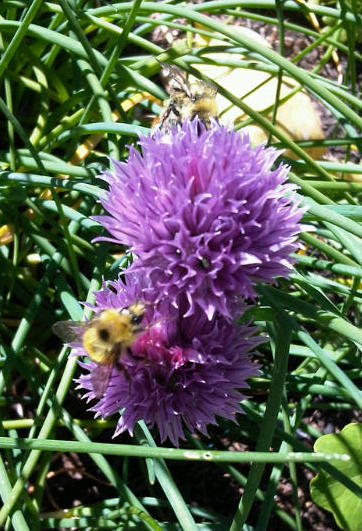
bees on clove flowerThe hive has been in place one week and so far things seem to be going smoothly. Initially I wasn’t so sure; the weather was very wet and cold and there were very few bees entering and leaving the hive. As well, there was a huge pile of dead bees right outside the hive, and I was concerned that there had been a beeicide. Every day I ran out to the back of the yard to check things out, and there wasn’t very much bee action.

hive and bees

By Friday the rain stopped, the sun came out and so did the bees. The bees have established their flight path which goes out the front of the hive (to the south), then takes a sharp turn to the east and then up. If you approach the hive from the house, you will be surrounded by bees coming and going. Of course, it took me a few days to figure out that when I was watching the hive (or taking the picture above) that I was interrupting the flight paths of hundreds. Happily, I did not get stung.

The response to the bees has been mixed in our house. The Man spent a lot of time watching the hive this week and the resident Compost Expert (child #1) did a lot of weeding near the hive and then asked if we were planning to get our own bee suit, eventually. The non-bee lover is protesting the arrival of the hive by not stepping into the back yard.

The good: This has been a week of kale, chard, lettuce, spinach and arugula. All the winter kale is now gone and last years chard is bolting and going to seed. The lettuce is doing well, but reaching the end of it’s life, so I planted more a few weeks ago and again this weekend. The arugula is a new kind, which grows close to the ground and has a LOT of leaves per plant. The over-wintered spinach did really well but is now starting to bolt. Fennel is coming up and the potatoes are taking off. The first of the fava beans are making pods, but are still small and soft. Beans are all coming up.

The bad: something ate most of the carrots. Boo.

The ugly: the tomatoes are not growing and I have given up hope. Likely the beans will overgrow them and take up all the sun.

Posted in Uncategorized | Tagged , , , | Leave a comment