Winter gardening: lessons learned and modified expectations

Winter chard and kale

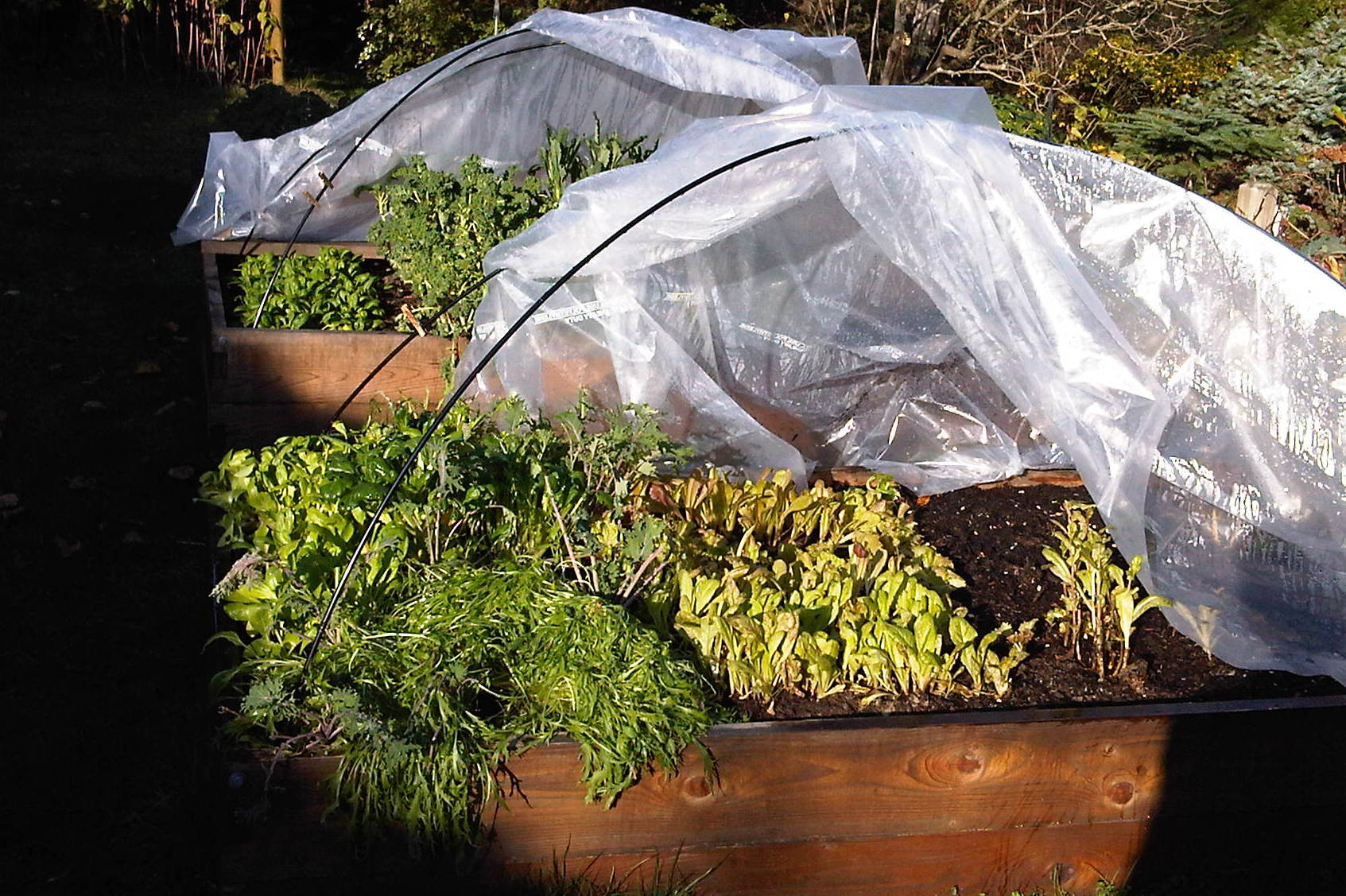
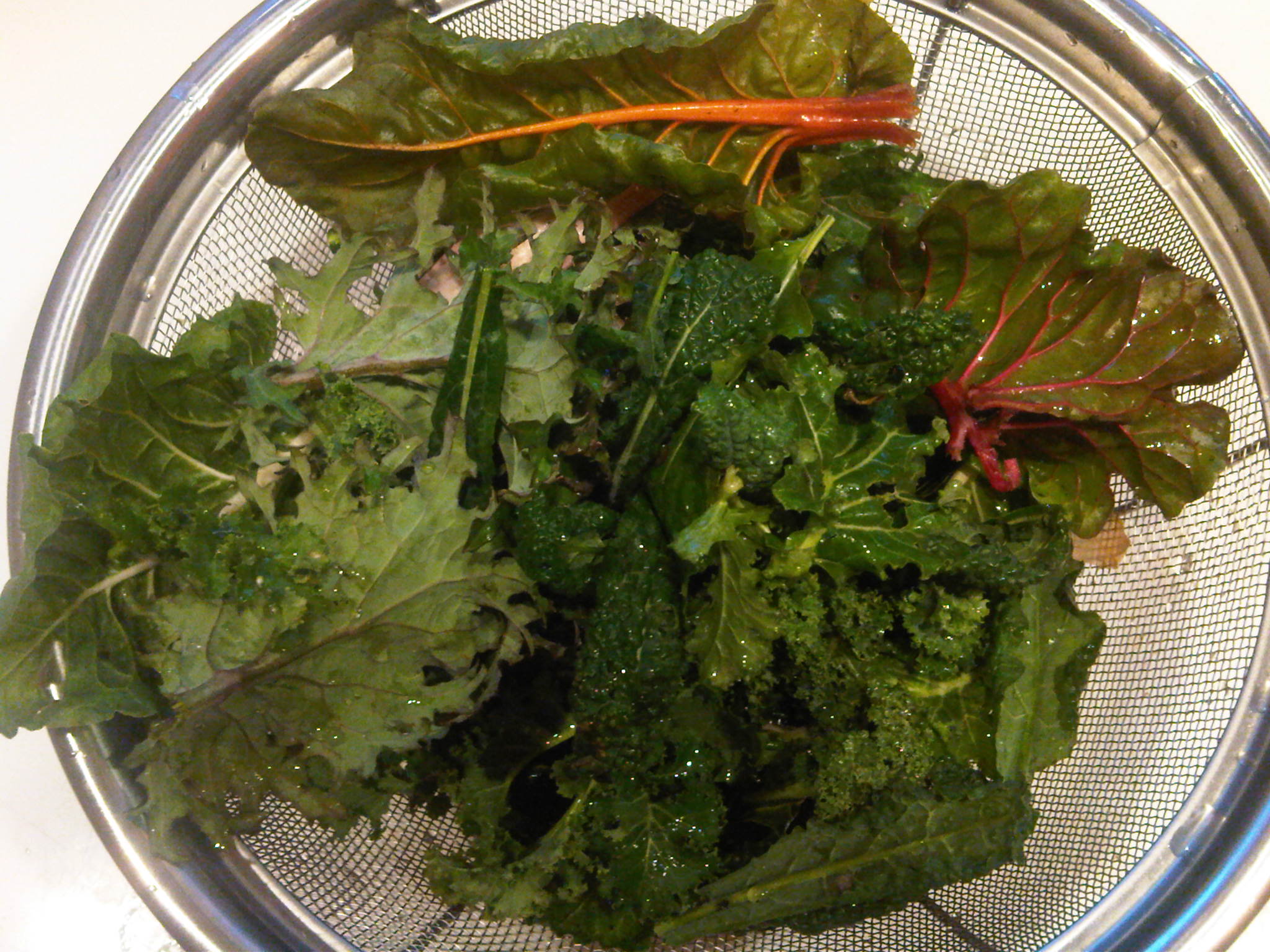
Winter chard and kale from my garden

This is the second year I have tried to garden year-round, and  I am happy to report that this year has been much more successful than last. The big lesson I learned last year was that plants need to be planted early – in July or August – so that they are fairly large and well established before the cold weather hits. If you plant your winter garden in September or October, you are just going to be watching a bunch of tiny sprouts suffer in the cold.

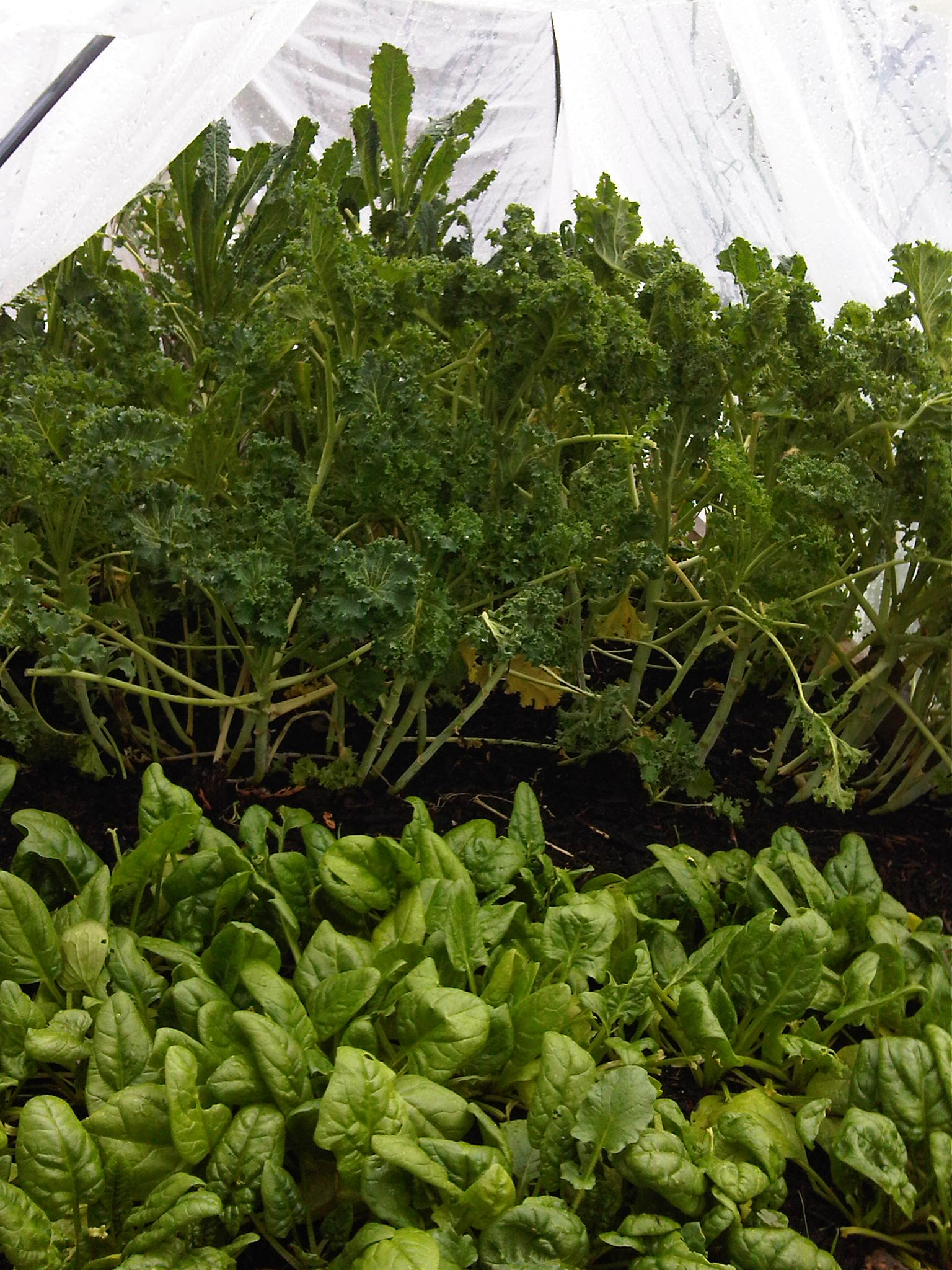
This year by the fall equinox, I had spinach, kale, carrots, pac choi and four types of lettuce all growing strong, as well as some Swiss chard that had been planted early in the spring.  The spinach, lettuce and half of the kale were covered. I didn’t have enough materials to cover everything, so the uncovered kale became the control group.

My big expectation was that winter gardening would yield a reliable source of greens throughout the winter, and that covering my vegetables would substantially increase my yields. This was not quite the way it turned out. Here is what I learned:

  • Things don’t grow very fast in the winter. Okay, so this is kind of a no-brainer, but for some reason I have been waiting for an explosive abundance of kale. NOT GOING TO HAPPEN. Each time I go out to harvest I have been picking the largest few leaves off each plant, and with each subsequent harvest the leaves are getting smaller and smaller. Most leaves are now the size of my thumb. By spring there won’t be anything left, but that’s okay. Other plants – spinach and lettuce – haven’t grown at all this winter.
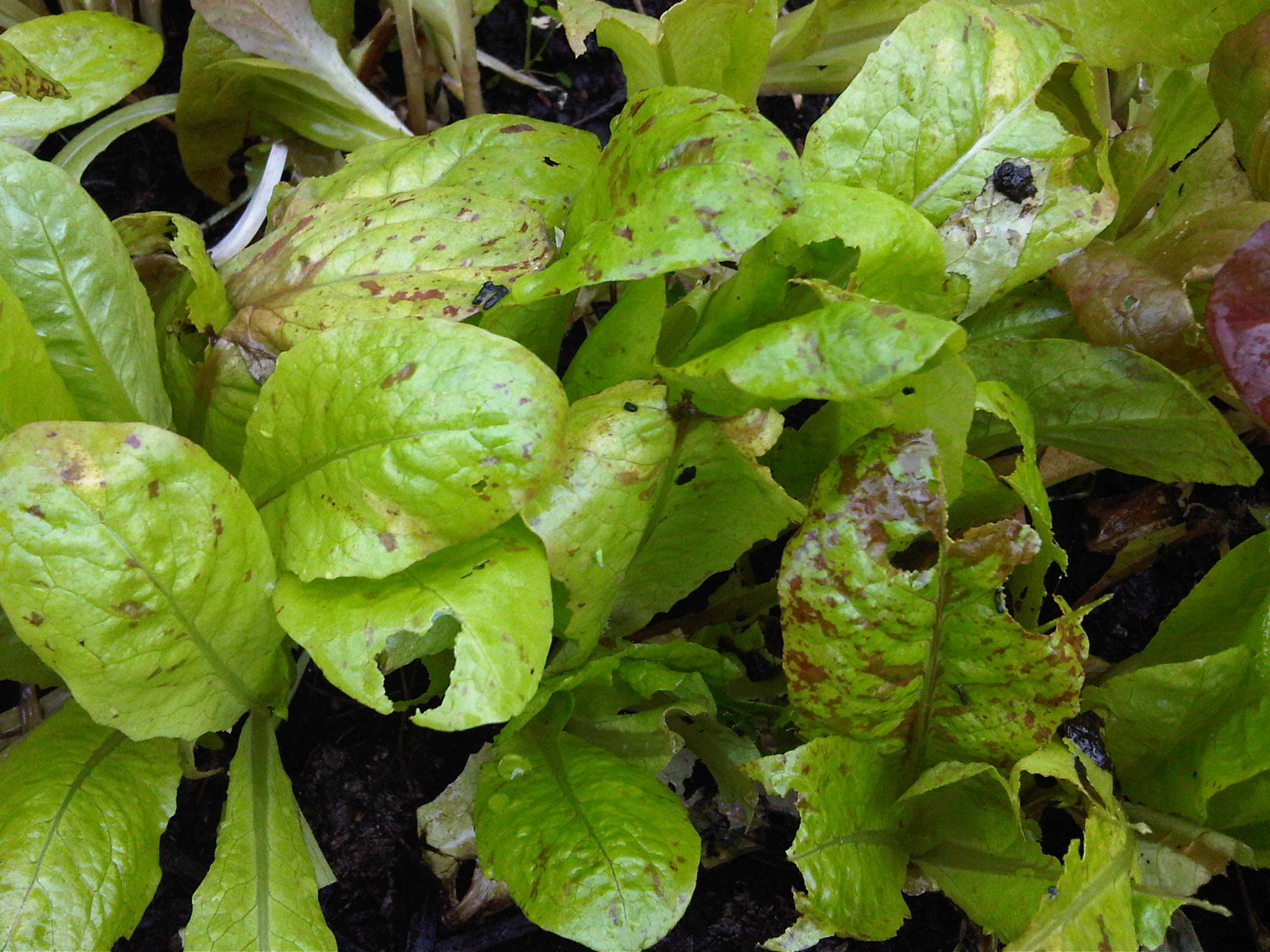
  • Don’t cover the plants until it gets cold. I put up the slug biodomes at the end of October, and created the party palace for every slug and bug in the garden. By December the activity had stopped but by then most of the lettuce had been eaten. Next year I will put up the covers much later, especially since….
  • The covers don’t seem to make a lot of difference in the rate of growth. The curly kale is growing at a similar rate inside and outside the biodome. Although the kale growing outside is slightly smaller, it is also denser and much curlier, but tastes the same as the inside kale. The lettuce and spinach inside the dome are not thriving and the chard outside the dome is growing just fine. The one advantage of the dome is that it has prevented the plants from getting flattened by snow.
  • Don’t plant stuff you don’t like to eat. I keep telling myself this and yet I am still not learning. The pac choi is doing GREAT – but it is hard to tell if it is actually growing, or if it is just not being eaten by humans. I also grew mizuna lettuce, but everyone kept picking out the leaves and leaving them on their plate so I finally pulled it up.

Overall, this year’s winter garden produced less than I expected, but is still producing enough so that we have a serving of fresh veggies from our garden about once a week –  the photo at the top is a typical harvest. I expect that the fava beans and arugula planted in November will have a head start this spring, and I am also hoping that  my spinach comes to life in the warmer weather. Late next summer I am going to plant winter kale again, but will skip the spinach, lettuce and pac choi, and won’t put the dome on until December.
Posted in Uncategorized | Tagged , , | Leave a comment

Soil Amendment (warning: boring post about fertilizer)

I haven’t spent any time in the garden in the last month except to empty the compost into the bin and to pick kale and swiss chard. Today was fabulously sunny so I decided to go out and do a few tasks that I have been meaning to do for the last month: rake leaves from under the shrubs, rake the larch needles and weed. A change of plans was required as the leaves, needles and weeds were all frozen onto the ground, so instead I cut back some of the ornamental grasses and the plants that had been flattened by the snow, and removed the display of “festive greenery” on my front porch.

I also checked off another box on the “to do” list: fertilize! The rhododendrons, azaleas, the apple tree and the raspberries were fertilized with the appropriate fertilizers. Most of the fertilizer is sitting on top of the frozen soil but will dissolve and soak into the soil once it warms up and rains again. I also spread dolomite lime under the raspberries and spread lime in the garden boxes. When it comes to fertilizers, I really don’t feel like I know what I am doing,  so after some very superficial internet research here is some basic information about some of the soil amendment agents that I used.

Dolomite Lime: Dolomite lime consists of magnesium phosphate and calcium phosphate, and can be used to raise soil pH to counteract the acidity from coastal rains and from fertilizing with manure (both of which lower the pH).  West Coast Seeds recommends liming at last three weeks prior to planting, at least once every three years. Some websites argue advise against liming in the same year that you fertilize (whoops…good to know).

Bone meal: This slow-release fertilizer is primarily a source of phosphorus, with a nitrogen-phosphorus-potassium ratio of about 4-12-0. It is also a source of calcium. I ended up using a lot of it in the fall with bulbs. According to Wikipedia, it is a mixture of ground animal bones and slaughter-house waste products (nice!).

Fruit tree and berry food: The product that I used was from Evergro and has a nitrogen-phosphorus-potash ratio of 4-20-20. The box says that nitrogen is necessary for photosynthesis (leaves), the phosphorus is necessary for root development and to set fruit and buds for blossoms, and the potash is required for disease resistance, winter heartiness, and hastens the maturing process of the seeds and fruits and improves their quality. The fertilizer also contains other stuff like sulphur, magnesium, calcium, zinc, boron and copper.

Rhododendron and Azalea food: Also from Evergro, the product has a nitrogen-phosphorus-potash ratio of 10-8-12, and is ideal for acid loving plants like rhodos and azaleas. Fortunately, I didn’t lime any of these ones. This product also contains lots of other things like magnesium, boron, copper, iron, manganese, zinc and molybdenum. I feel like I am reading the side of a vitamin package – it all sounds good, but I don’t really know what it means.

What I also learned from reading the packages (which I should have read more carefully before going into the garden) is that the fertilizer shouldn’t be sprinkled around the stem of the plants but applied in a circle 30 cm from the stem of rhodos and 10 cm from raspberries. Learn from mistakes is going to be the theme of my garden efforts again this year, obviously.

Posted in Uncategorized | 2 Comments

White Christmas?

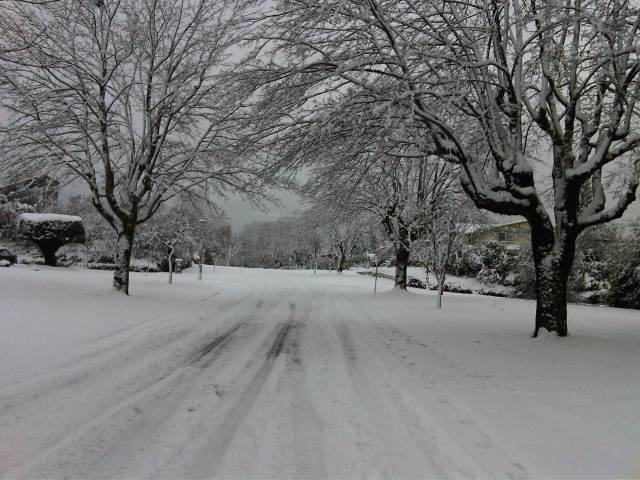
College Highroad, December 19

College Highroad, December 19

Yesterday it snowed heavily and Vancouver traffic was the usual nightmare. Even though I don’t have to commute (and I am annoyingly smug about that), I find the snow distressing because of the damage it always does.

After meeting a friend for lunch, I returned to campus by bus. After making it up the big hill, the bus got stuck on the flat part of upper West 10th pulling away from the curb. The driver made us all move to the back of the bus to increase traction and then managed to escape the snow rut. As we crawled along University Boulevard I noticed the piles of broken branches under each of the trees.

This picture was taken just before turning on to my street. The snow was very heavy and wet and I could hear branches snapping. One of the lauryls was bent over (and will have to be cut off),  the Kousa in the front was split in two, and many of the lovely little evergreens in the back and the cedars on the side were bent over from the snow. I am going to wait until after Christmas to call the arborist to see what he can do.

In the meantime, I wish you all a very Merry Christmas and all the best for 2013!


Posted in Uncategorized | 2 Comments

Planning for 2013

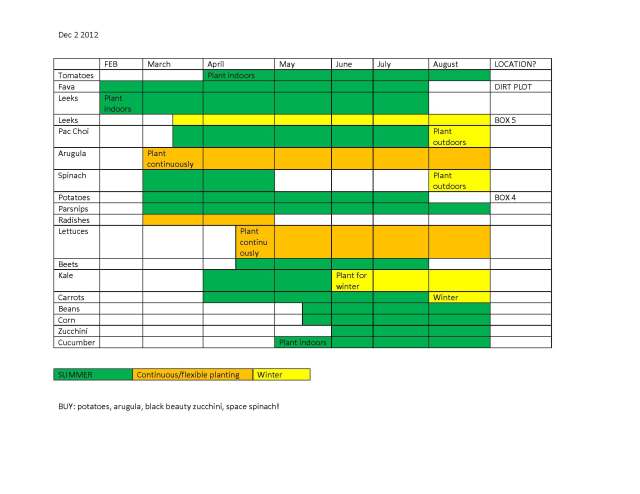
Garden plan 2012

After a few early Christmas baking failures, I’ve decided to take a break and put my seeds in order and think about what I need to do differently next year in the garden. With the exception of fava bean extravaganza and the bumper crop of apples, this last year was a little disappointing. Even my kale didn’t grow as well as I expected. However, this may just be a matter of my expectations being too huge, because we did get lots of tasty vegetables, especially zucchini, cucumbers and lettuce.

For the last two years I followed a four-year rotation planting plan which groups vegetables by nutritional requirements. The vegetables are specifically planted in a different part of the garden each year; not only do they get the most benefit from the current soil conditions, but they optimally condition the soil for the set of vegetables that are planted there next. Over the four year course, the soil is renewed.

How this works in real life (if you garden like me) is that you end up having huge empty spaces left in certain beds, which get impulsively planted with something that is not part of the “plan” and then there isn’t space to plant what needs to be planted next.

This year the plan is to take a more temporal approach and plant things in the spring, to be replaced by summer crops and then winter crops. Surely, it can’t be worse than what happened this year. When I figure out what this looks like, I will post it here…wish me luck.

…………..

Today I need to cut the dried hydrangeas off, so that they don’t break in the snow. I removed about 25% of the old wood earlier in the fall, so don’t want any of the remaining branches to snap off. I am also going to start liming the vegetable beds and fertilizing the big hydrangeas.

Posted in Uncategorized | 1 Comment

The Emotional Life of Trees

Fall larch tree

This time of year my larch is in full color. Time to enjoy –  in another week the tree will start to drop the needles and the cone-laden branches. This tree requires some complicated pruning each year because of a tree versus power line conflict.

An arborist we used to hire LOVED this tree;  he was definitely well suited to his job and I could tell he loved trees in general. He would come to the garden for a tree inspection. He would always touch the trees, either laying his palm against their trunks or caressing a branch, and ask me “how is this tree doing?” That always made me laugh, because it was as if he was inquiring about the tree’s emotional state and how it felt in the last few months, rather than it’s physical state. Once I called him on the phone and asked him to come over to remove a sick tree, and his first response was a panicky, “NOT THE LARCH!!!”

Trees have so much impact on the immediate physical environment and on the landscape, so it’s not surprising that some people develop relationships with them. I feel angry when someone illegally removes trees just to improve their view (I am shaking my fist at that person on Beach Drive who killed the trees in front of their condo) so I found it really hard to make the decision to remove a big Danger Tree a few years ago from our yard. The cedar was enormous, located near the front of the driveway and had started to drop large branches every time there was a storm. Because of the location and the way that it was planted (above a retaining wall) the roots didn’t secure it into the ground on all sides, and it would have fallen on our house if it was blown over.  Despite the fact that it was a hazard , I was really upset when it was removed.

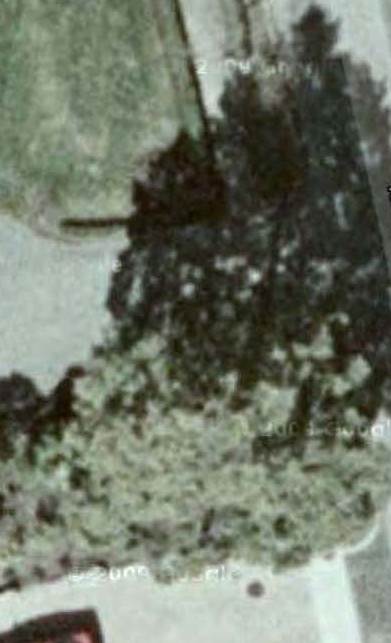
This Google satellite picture shows the cedar that we had removed. The shadow spreading across the road shows how large the tree was.

The tree is no longer visible in Google street view because of a recent update, but here is a Google satellite view of the tree and it’s shadow.

I just realized that I have a lot of tree-related emotional issues that  I could keep writing about.  However, I need to do some work today, so will end here.


Posted in Uncategorized | Tagged , | Leave a comment

Tomatoes and the end of the world

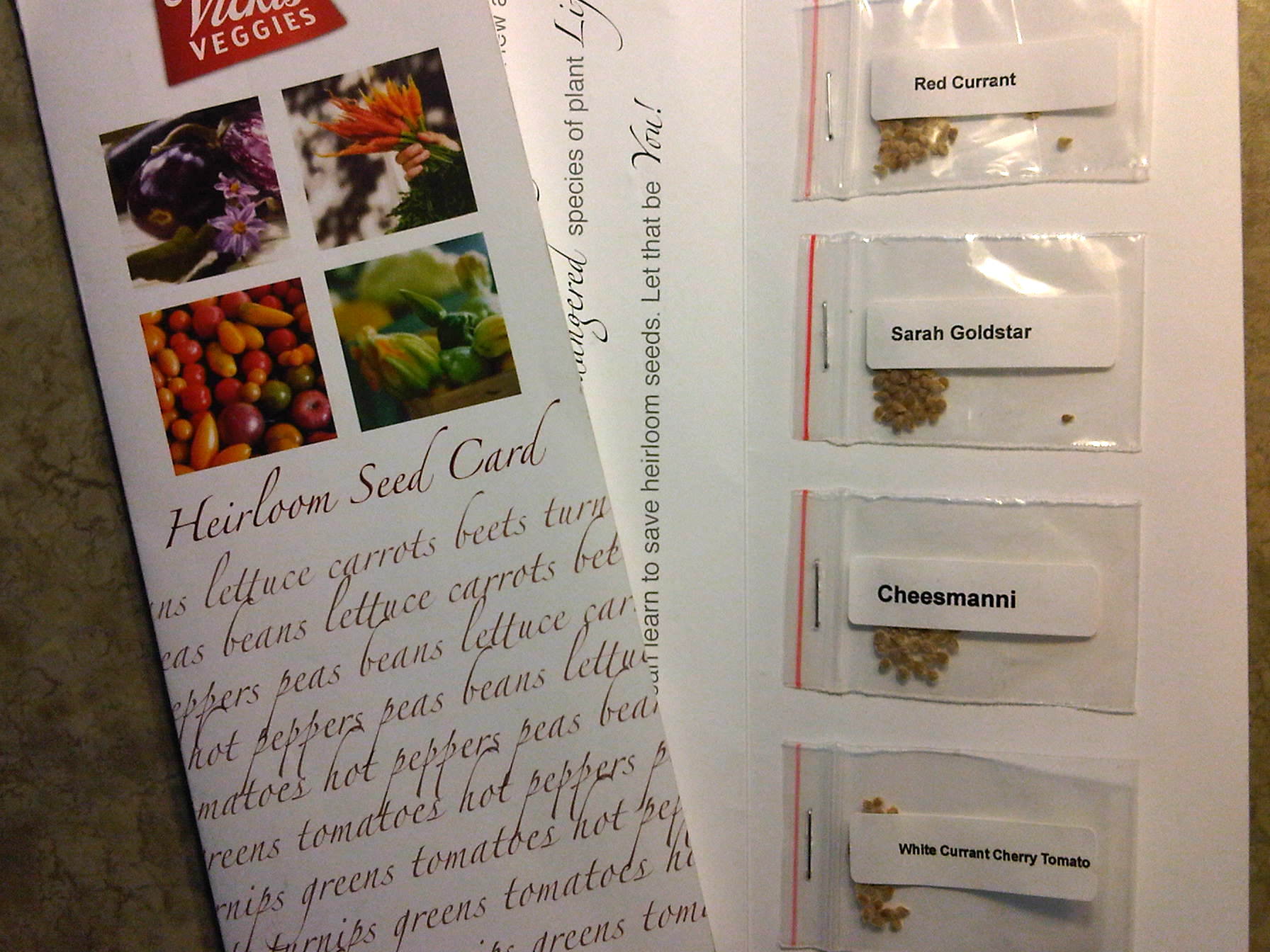
Heirloom Seed Cards from Vickis Veggies and my friend Madame Z.

My good friend, “Madame Z”, is counting down the days to the Mayan Apocalypse on December 21st, by Facebooking suggestions for how to spend each of these last days. I know that Madame Z is not at all serious about the Apocalypse because she recently gave me a fabulous gift: two Heirloom Seed Cards that she picked up at Tomato Festival in Ontario earlier in the fall.

The seed cards are from Vicki’s Veggies in Milford, Ontario, and each contain four different varieties of heirloom tomato seeds including: Red Current, Sarah Goldstar, Cheesmanni (two packs of those), White Currant Cherry Tomato, Tigrella, Una Hartsock, and Odd Shape (pink). Madame Z asked me to give her a few plants of each variety in the spring, so am already planning my tomato growing strategy.

By coincidence, the day after I received the seeds I read an excellent blog post about “Grow So Easy Organic: How to start, raise and grow tomatoes“. I subscribe to this blog, and I find that it is always a great source of gardening information and inspiration. In particular, I found Pat’s advice about planting the tomatoes up to the first set of leaves, pinching off the first flowers, and fertilizing with Epsom salts to be particularly helpful. (Click on the link above to read her blog post).

When I first sat down to write this post, one of my favorite clients called to ask me if I had time to edit a document. I said “Yes, I am just writing about tomatoes, but can put that aside for now”.  Unbeknownst to me, my client is one of the great Western Canada tomato growers and like all great tomatoes, he has Italian roots. He offered some additional good advice:

  • He recommends growing tomatoes from seeds to maintain the variety. He grew two different Italian varieties from seeds this year, one variety from his mom and the other from his mother-in-law.
  • It takes an extra 30 days for seeds to grow in Vancouver weather, unless you have a green house or covered garden area to work with. Next year he is going to plant his seeds in April with a cover.
  • Use mushroom manure every year or two years to ensure great blooms and fruit.

Okay, I need to stop dreaming about my next fabulous crop of tomatoes, and get back to work. Thanks to Madame Z for the seeds and to Pat from Grow So Easy Organic and my client, Mr. Italian Tomato for all the great advice!


Posted in Uncategorized | Leave a comment

What’s more important: sunlight or warmth?

November sunshine – rare in Vancouver!

I don’t normally think of sunlight and warmth as mutually exclusive, except for yesterday, when I had to decide which of those were the most important for my plants. We had some fabulous sunshine, but without the usual winter cloud cover, the air was very cold (5 degrees celcius).

I ended up choosing sunlight, and pulled back the plastic on the slug biodomes so that all the plants could get some UV. This released all the warm air, and I worry that I put the plastic back too late for the air inside to warm again. I also watered the plants because for the first time in two weeks, the soil was getting dry. I hope that they won’t freeze…

A few points:

  • The inside of the slug biodomes smell like rotting cruciferous vegetables. Although I have been grooming the plants regularly – removing yellowing leaves or any other signs of death and decay – something isn’t happy.
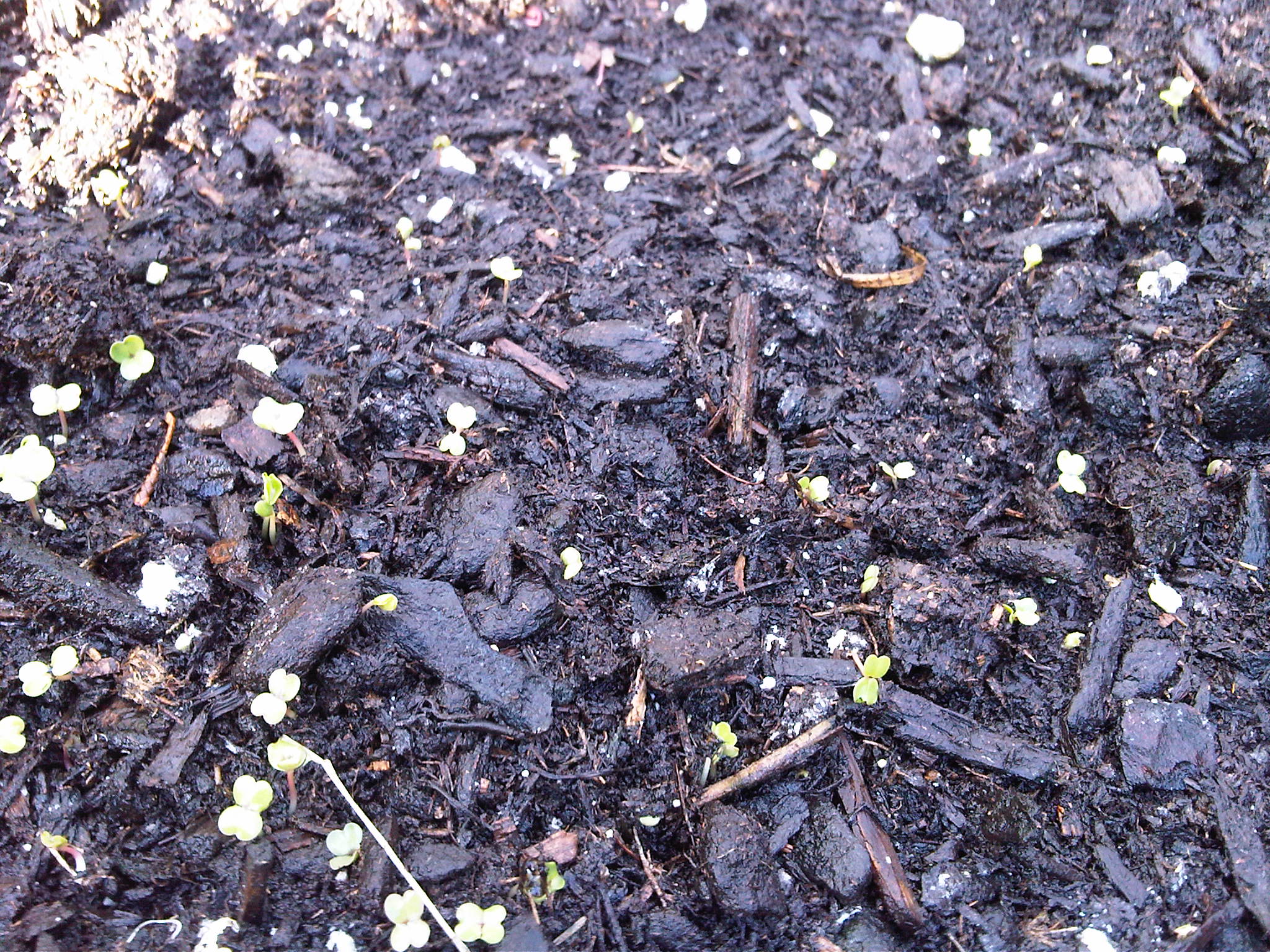
  • The baby arugula I sowed last week has sprouted (see below). I hope it survives the slugs.
  • I have been carefully soaking the kale and lettuce that I harvest from the biodome. I usually add one drop of enviro-bio-dish detergent, as that encourages all the slugs to float to the surface. Last week six slugs floated to the surface from the kale – a record number.  No, we did not eat them.
  • I pulled out two of the big mizuna plants (bottom left on the photo above). The mizuna is actually the only thing remaining from the mesculin blend that I planted early in the year. Unlike the pac choi and all the other lettuces planted in that box, the mizuna doesn’t seem to be very cold resistant and has started to rot. The plants are probably too crowded and are producing stalks with very little leaf material. Also, the plant has a “sharp” texture similar to parsley, so my kids won’t eat it.

This weekend I also put the hoses away and turned off the water at the back of the garden so that it doesn’t freeze. I pulled the hoses out into the driveway and then wound each of them up, then connected the two ends (so that the water doesn’t leak everywhere, and tied them up with a few bits of twine. They are now out of the way and in the store room until spring.

Arugula sprouts in the biodome…

Posted in Uncategorized | Tagged , , | Leave a comment

Weedy Wednesday

Today looks like one of those rare sunny fall days; get out and do some weeding. Please go to my post in BC Living: http://www.bcliving.ca/garden/winter-weeding-tips!

Posted in Uncategorized | Tagged | Leave a comment

Deciding what grows and what goes

Now that many of my plants such as the lilies, black eyed susans, crosocmia and salal are thriving and starting to spread, I need to make some hard decisions about what gets to stay and what gets pulled up. Some of the more invasive plants are starting to grow under and around the shrubby evergreens, rhododendrons or the viburnum. As a result, these plants are suffering from the lack of light and/or nutrients.

Today I pulled out the crocosmia and black eyed susans that had started to spread away from the main plants. The growth of the woody pink thing in the front (I think it might be related to a hydrangea) caused a HUGE bald spot on the back of my viburnum, and I was so annoyed that I cut the plant back to the base. I also pulled up all the oregano that was starting to spread across the front yard and need to keep an eye on that again next year.

On the positive side, this is the first year that the salal, which was planted in the fall of 2007,  has started to thrive and spread. We are trying to create a low maintenance native garden in the front, and the salal and the evergreen blueberries (also thriving) are a big part of the plan.

Right now the Japanese Maple in the front is SPECTACULAR but we can’t see it from the house or from the street because it is hidden by the rest of the trees, so are planning to move it closer to the house, in the place previously occupied by the Italian Plum. (I will take a picture of that soon). That whole front corner is getting very crowded and I think that some of the smaller trees need to be removed – they can’t all thrive there.

In response to my last post about the slugs, Pat from Grow So Easy Organic suggested that I try diamaceous earth to discourage slugs. Diamaceous earth is organic, and because it is like very fine glass, slugs are cut to death when they travel across it.  Pat suggested applying it when I first seed or transplant, but said that I can apply it around the perimeter of my beds if I am careful. She also suggested buying it from a feed store, and not a pool store. Thank you Pat, much appreciated! I will try that next week….

Next: Heirloom tomatoes.

Posted in Uncategorized | Tagged , , | Leave a comment

Chrystal vs Slug

A view into Slug Biodome #2

The slug biodomes were activated just over a week ago, and a quick inspection  revealed that the plants in biodome #2 are all doing very well – the spinach is growing quite fast and the kale is thriving. I was especially happy to see that the kale had few aphids. The bottom leaves on each plant are turning yellow and falling off (see photo above), so I removed all the detritus.

I also planted some arugula in the empty space on the far side of the dome. Yes, I know it is too cold to germinate but I wanted to try anyway.

Evidence of slug activity….

Biodome #1 has obvious signs of slug activity and the lettuce is “failing to thrive”. Still, there are at least a few salads there, if I manage to harvest the good lettuce before the slugs eat it all.

This weekend is about winter preparation activities:

  • Folding up all the deck chairs and putting the tables away.
  • Putting the rest of the slug biodome materials away (currently sitting in covered area).
  • Cut back dying foliage on lilies.
  • Planting snowdrops and last tulips
  • Weeding, especially the garden boxes.
  • Raking leaves (delegated task)
  • Planting blue anenome corms.
  • Writing a “wrap up” blog of 2013 successes and failures.
  • Doing some tomato research.
Posted in Uncategorized | Tagged , , | Leave a comment