Transplants: Lily of the Valley

During my undergraduate degree in Victoria, I lived in a basement suite in Cadboro Bay, in a house with a fabulous garden. The garden was lush and private, and the trees and tall hedges surrounding the yard gave it a kind of intimacy. During the four years I lived there, many quiet afternoons were spent reading in the hammock or in the lawn chairs. Decades later, I still have fond memories of that lovely garden, and I am so glad that I am able to still go and visit. Although the garden has changed – the King apple tree in the corner is gone, the vegetables have been replaced by flowers and a large house next door now looks down into the garden – it still feels like home to me.

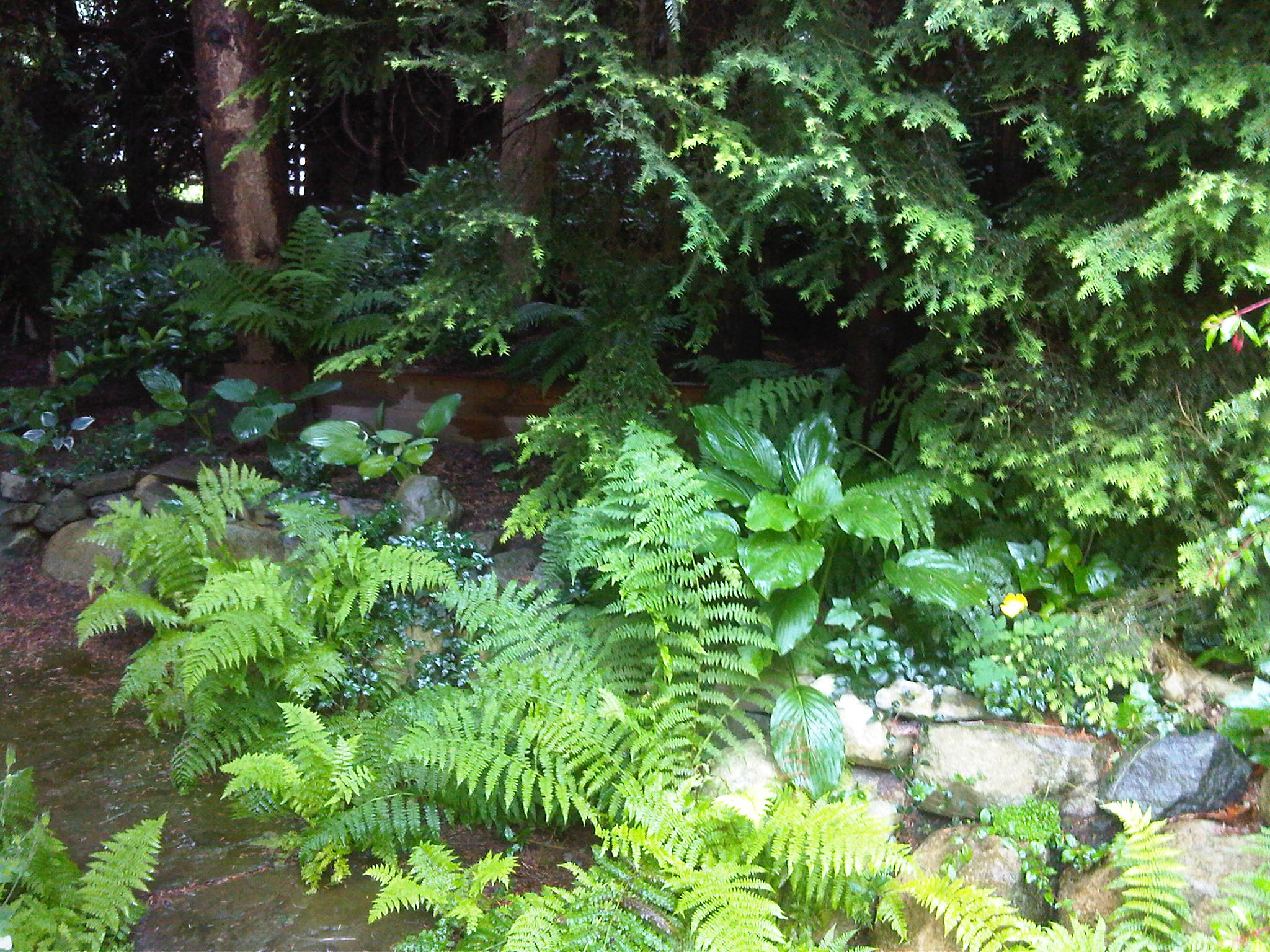
This spring, my friend who lives in the house, sent me a letter asking me to come and dig up some lily of the valley from her garden and to take it back to mine. So, I went to Victoria and we had a lovely visit over tea and were joined by her family, who I feel part of, and am part of. Although we didn’t talk about it explicitly, the difficult process of saying goodbye has started. At the end of the visit I dug up a few lily of the valley plants which are now in my shade garden (above). I hope to see them bloom next spring.

Posted in Uncategorized | Leave a comment

Transplants: miniature strawberries

This is the first of three posts are about “transplants” – plant gifts from other gardeners.

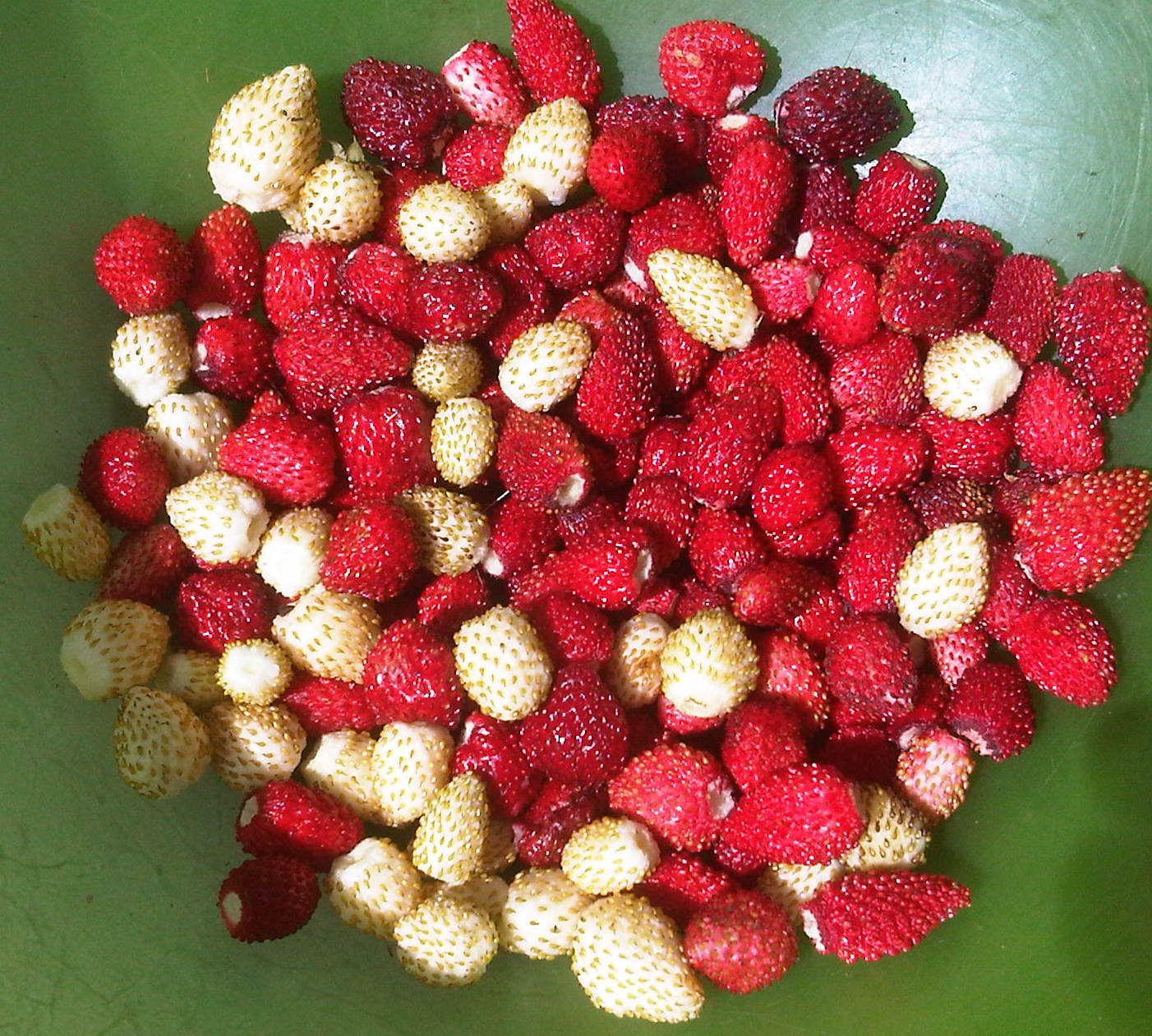
These miniature strawberry plants came to us from a garden on Gambier Island. We planted them in the back yard and within two years they had started creeping around the house and up the steps. Now the strawberries are making themselves at home in the front yard, and I have even started to pull some of the more brazen plants out.

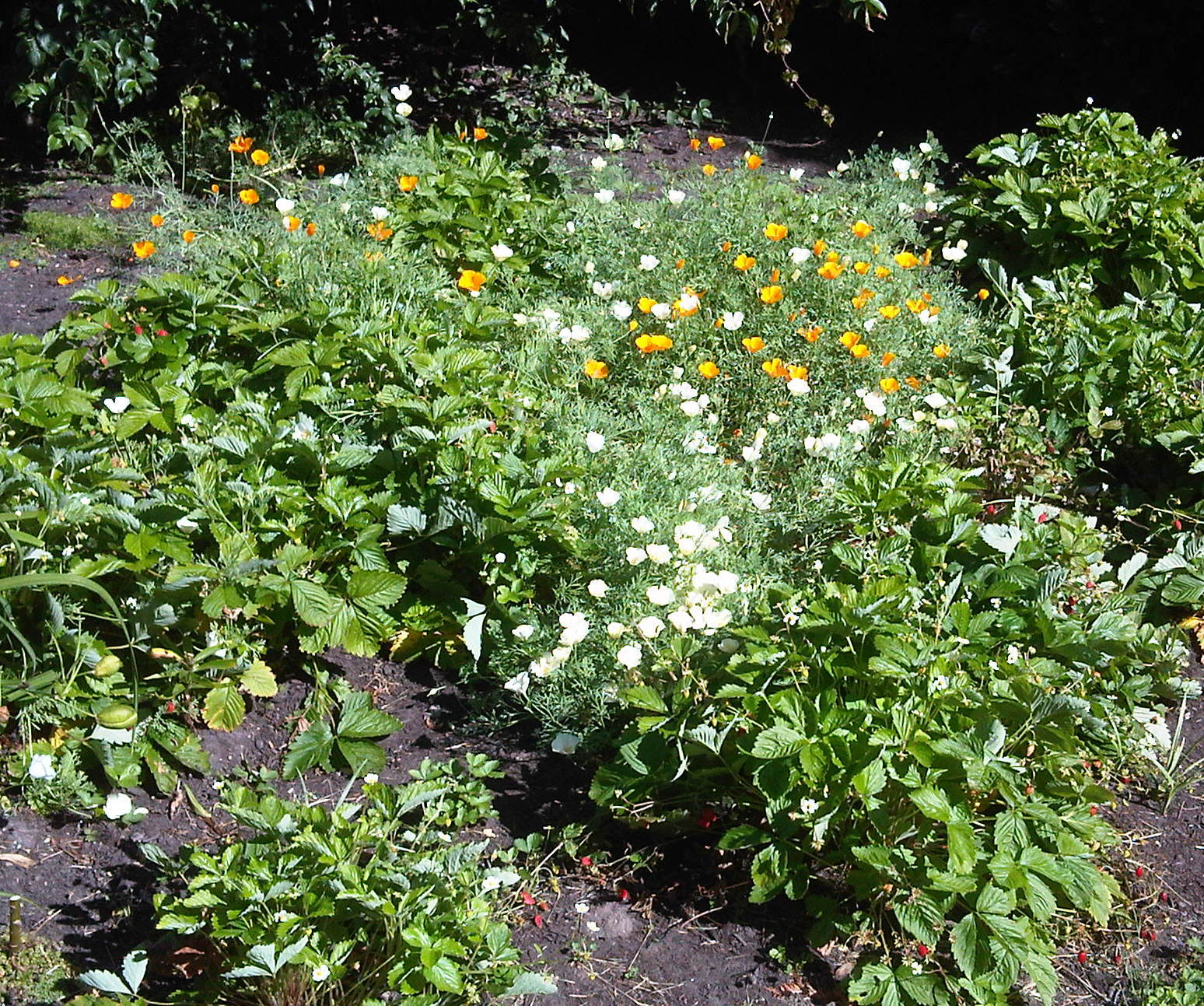
This year the strawberries have been particularly productive. Note that half of the the plants in the front yard produce albino berries and seem sweeter than the red ones. One reason for the high productivity this year may be due to the fact that the berries are located near California poppies, which attract a lot of bees. Interestingly enough, about half of the poppies in the front of the yard are also albinos.

Tomorrow: Lily of the Valley.

Posted in Uncategorized | Tagged , | Leave a comment

Compost Rant

(This post requires a disclaimer. Compost is my favorite gardening topic. I get extremely passionate and opinionated about compost and I can talk about it for hours. You don’t have to indulge me by reading this whole post. Really, you don’t. Just never bring it up when you see me in person or I just won’t stop.)
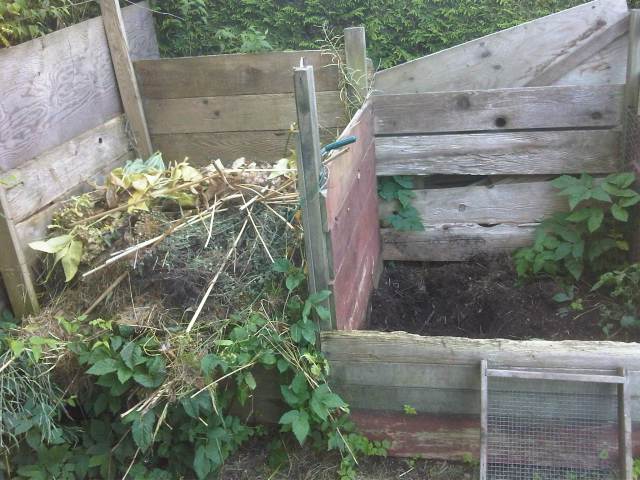
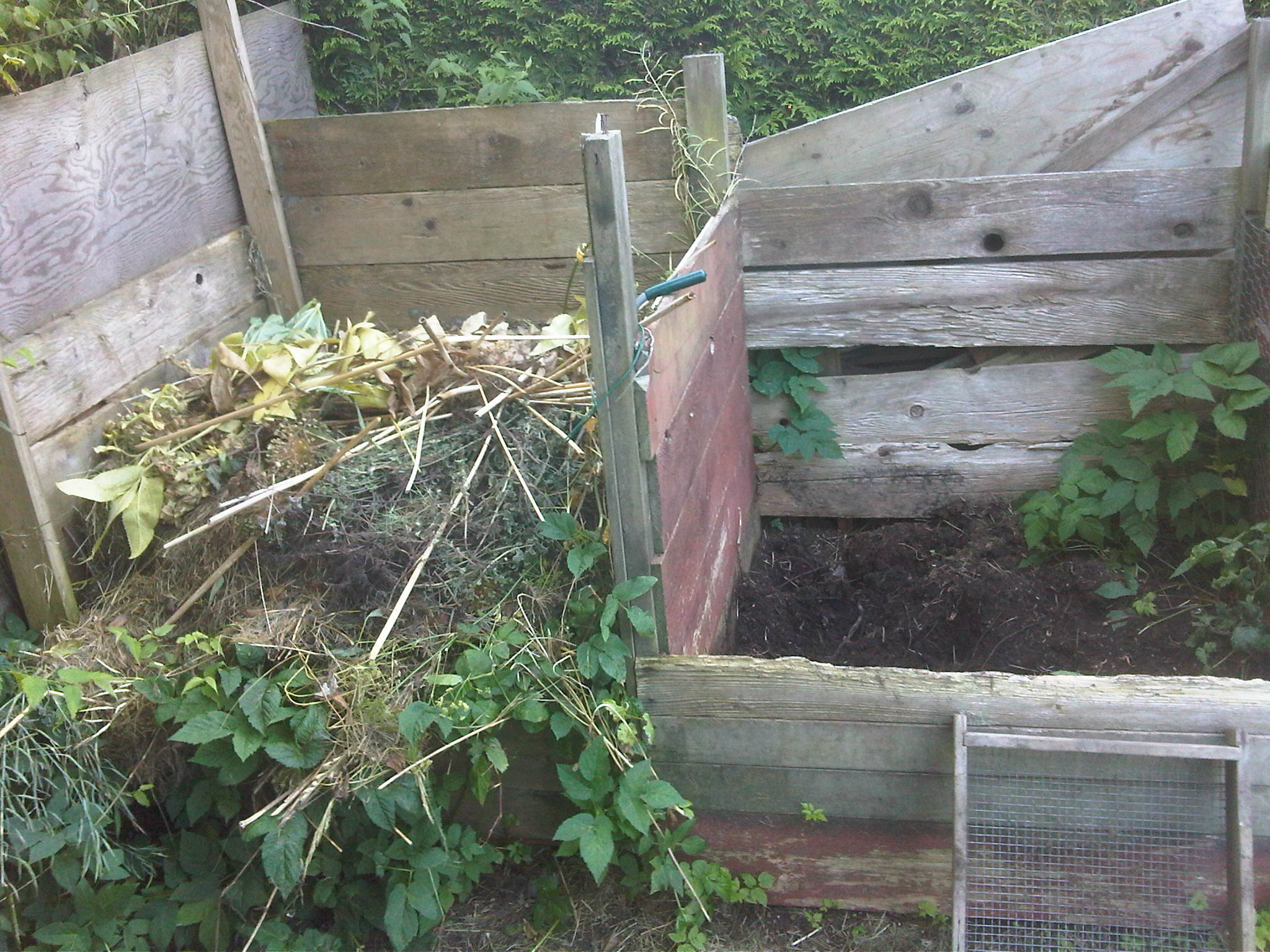
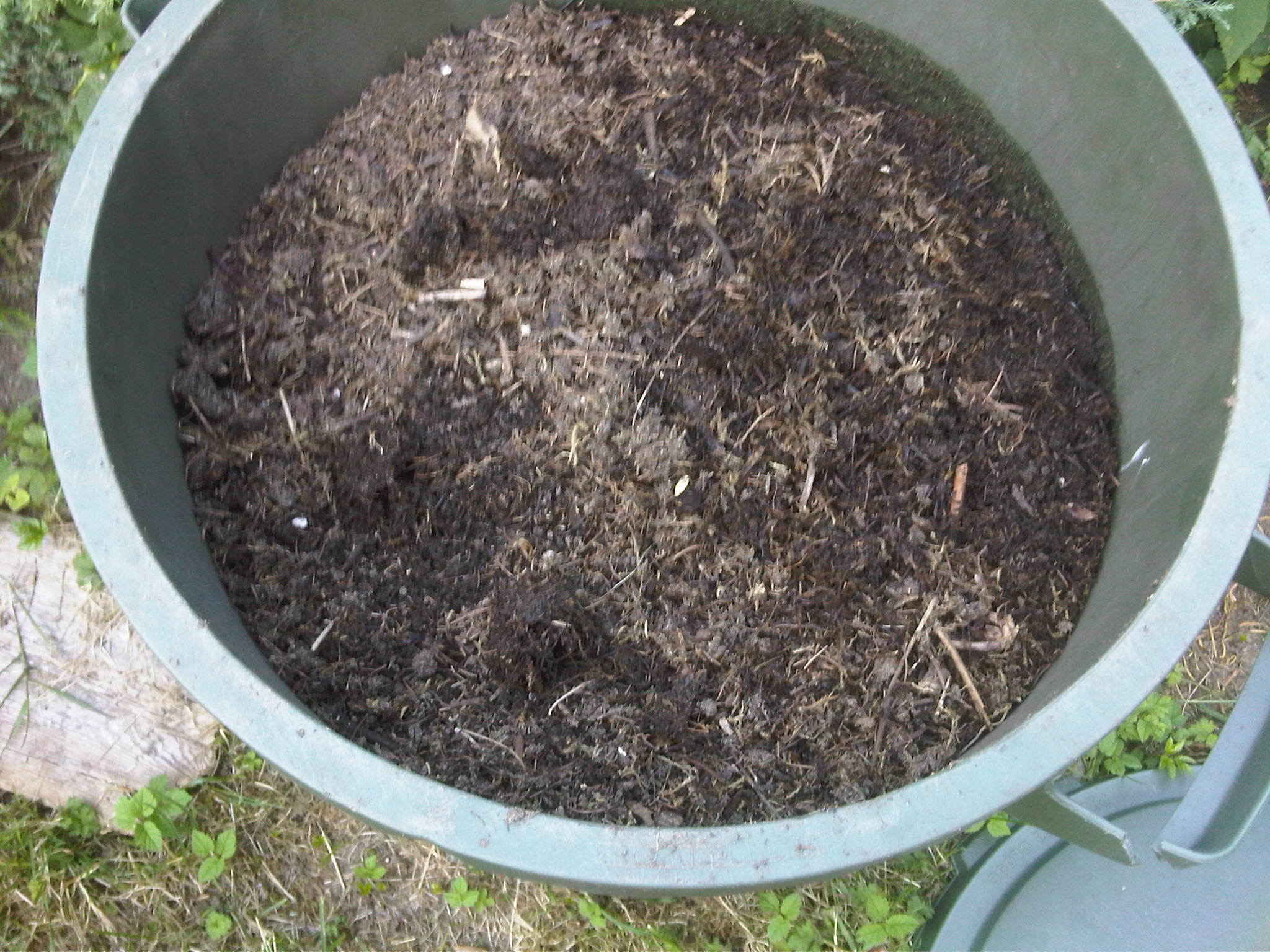
About once a year we dig up one of the garden compost bins at the back of the yard. In the photo above, you can see that I have started to dig out the right bin. The sieve is necessary to separate the compost – which at this point is loose particulate – from the undigested matter such as rocks, small sticks, bits of garbage, root balls, and bulbs. The whole process is very labour intensive, as the sieve is loaded with a few shovels of dirt, then shaken over the wheelbarrow or bin. About 85% of the material passes through the sieve, and the rest goes into the yard waste.
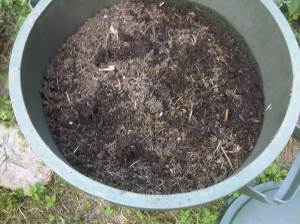
The end product (shown in the bin above) is quite uniform and ready to put in the garden. Most of it will probably be used to replenish the vegetable boxes later this fall or early spring.

By alternating garden compost bins, we can add new material to one bin while the other one rots. This means that most of the material in our yard rots for only one or two years before it gets cycled back into the garden. There are many things that don’t compost in that relatively short period of time including: hard wood and large branches, cedar boughs, hard pine cones (from the larch, for example), orchid roots, fruit stones, most types of evergreen leaves such as rhododendron. There are also a number of things that we don’t put into the compost because they are unpleasant, unhygienic, or induce the “yuck factor” such as holly leaves, dog poo, or dead things. We now just put all of that into the yard waste or bury it.

The food compost is not quite as straightforward. We only have one bin, and because we are adding new material almost every day, the food compost doesn’t have the same length of time to rot as the garden compost, and new materials get mixed in with the old. Last summer I dug out the bottom half of the compost bin, which was (in theory) the oldest material, and it was like thick, sticky mud, studded with avocado pits and fruit labels. Based on the large number of avocado and mango pits in the mix, you would have thought that our entire diet consisted of those two fruits alone. This demonstrated that composting is efficient and able to condense a large amount of material down into a small volume, and avocado and mango pits don’t compost very well. In the end I dug the mostly-digested food compost (minus the pits and the labels which I mostly picked out) into the garden compost to rot for the winter. This was a good strategy – and maybe it balanced out the pH or something – because that was the compost bin that am digging out now.

As a result of all the many hours I have spent digging out and sieving compost, I have some very strong rules for what can go in the food compost and what can’t. Here they are….

Chrystal’s rules for what doesn’t go in the compost

  1. Avocado and mango pits.
  2. Peels from some exotic fruits including avocado and pineapple. Maybe it just doesn’t get warm enough in our climate for these to compost properly? In contrast, we always put whole pumpkins in the compost after halloween and they rot down to nothing.
  3. Silk teabags and string.
  4. Fruit labels. Arrggggggggg. I HATE FRUIT LABELS.
  5. Corn cobs. They don’t decompose very well, and when you pull them out after three years in the compost bin, they are always filled with worms and bugs. UGH.
  6. Uncrushed eggshells. I have a superstition about crushed eggshells deterring slugs, so I have been saving my eggshells for this purpose for years. My good friend Dr. Mooks has been concerned that without crushed eggshells, my worms will be unable to digest food properly, so she gives me large containers of eggshell dust to help them. The real reason I don’t like uncrushed eggshells in the compost is because when you pull the half-eggshells out of the bin, they are always filled with masses of worm. UGH.
  7. Newspapers. Some people put all their newspapers in the compost. I don’t get it.
  8. Cherry pits, plum pits, peach pits. No, these don’t compost either.

That’s it for now…..I am sure I will remember more later.

Posted in Uncategorized | Tagged , , | Leave a comment

Seven blushing maidens

Every single time I utter the words “farmers market” in our house, the Man yells “Seven Blushing Maidens!” which is the short version of  “seven blushing maidens selling three heads of lettuce”.  This is how he used to describe the UBC Farm Market; every time we would got there with our small kids, there would be a huge line up of people competing to buy the small quantities of vegetables that they had available. For some reason, there always seemed to be excessive numbers of young, beautiful people working (or perhaps volunteering?) at the market.

Today I visited the UBC Farm Market* to see what they had in season. They had a great selection including all types of greens and lettuces, carrots, beets, radishes and herbs. As always, they had a blackboard that listed the items that had sold out, and the time they had sold out. I think this is great advertising, and motivates people to get there a little earlier the following week to get the potatoes and eggs. This week I bought three things that I was unsuccessful at growing in my garden: radishes, zucchini, and beets, all of it flawless.

The one thing that stopped me in my tracks was the garlic. The bulbs were perfect and enormous, and induced pangs of garlic envy. When I mentioned my garlic envy to the maiden standing nearby, she suggested that perhaps I had grown a different species of garlic than the type they had there. I almost bought one because it was so perfect and huge – almost the size of a turnip – but then I remembered my small, wormy specimens drying out the the garage, and left the perfect garlic for someone else to buy.

Today’s mission is to either move my pink peony or to shovel out the compost bin or both.

*I rode there on my bike. I deserve extra points for that.

Posted in Uncategorized | Tagged , , | Leave a comment

Garlic is almost ready

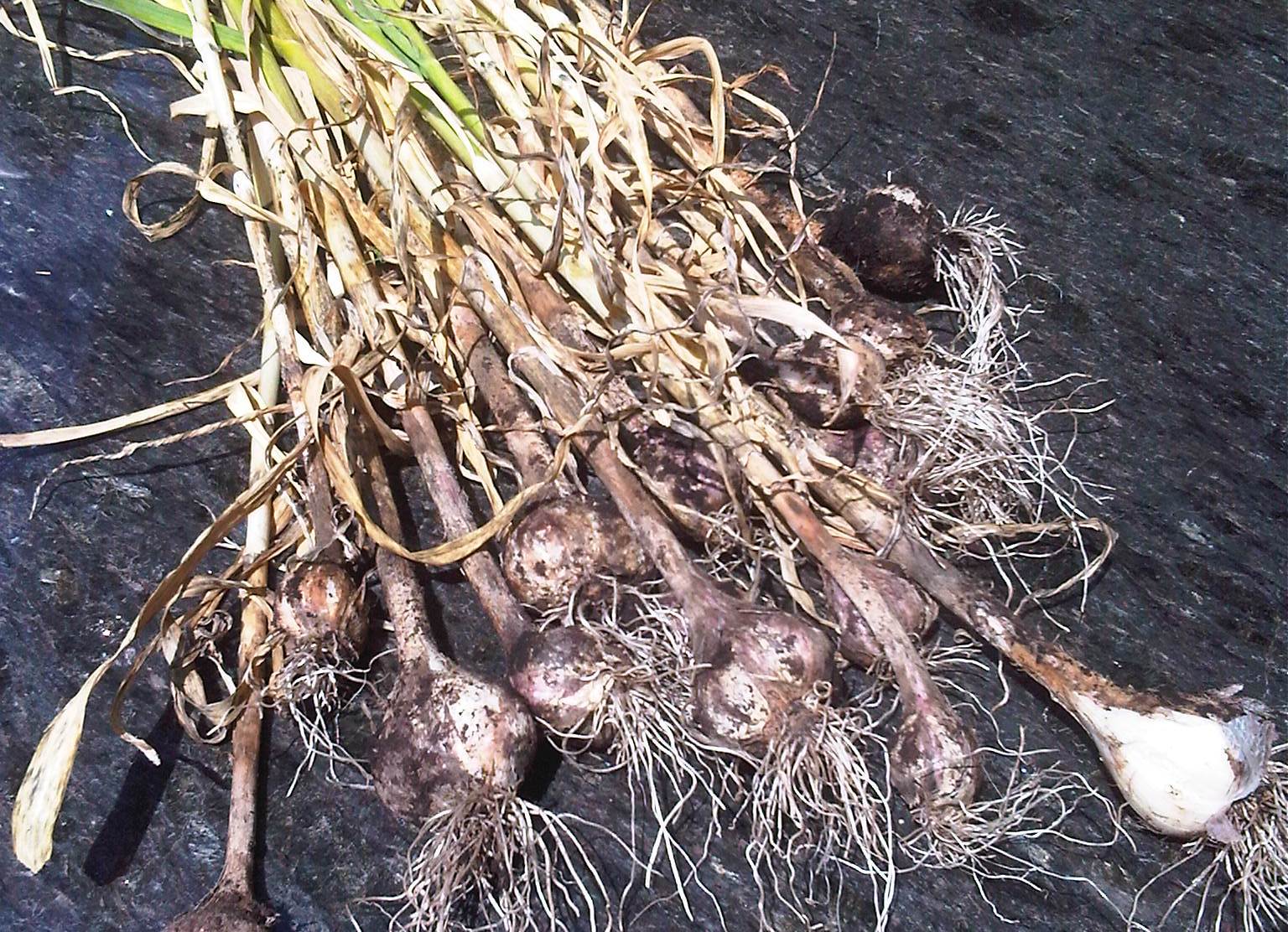
First few heads of garlic pulled out of the garden. Note the small clove size.

When I was small I was one of those people who would open all their Christmas gifts early and then would wrap them up again and pretend to be surprised on Christmas morning. Actually, forget the “small” part…I still do that and my family has learned to keep my presents hidden until the last possible moment.  The problem with having this type of personality in the garden is that once you pull something out, you can’t put it back again.

Today I pulled a bunch of garlic out of the garden. Although it isn’t too early, many of the heads were in dampish soil, so I am going to let the rest dry out more before pulling them up. Although I had a 100% germination rate on the garlic (every single one that was planted, grew), the size of the heads is a little disappointing and some only seem to have two or three cloves.

These garlics are now “resting” in the garage for a few weeks before I eat them. I will likely seek out a fresh source of planting garlic for next year instead of planting these ones again.

Posted in Uncategorized | Tagged , | Leave a comment

Preparing Fava Beans

The Fava Forest – now over 6 feet tall.

The fava forest is now over six feet tall and the bean pods are are ripening. Although fava plants grow straight up without support, as the pods started to get heavy I had to tie them up so they wouldn’t fall over.
When picking the beans this morning, I tried to pick mostly from the bottom of the plants, selecting the hardest beans. Because I have two types of beans planted together, I couldn’t go by size alone; the pods from the Hornby Island beans are much bigger than the Windsor beans.

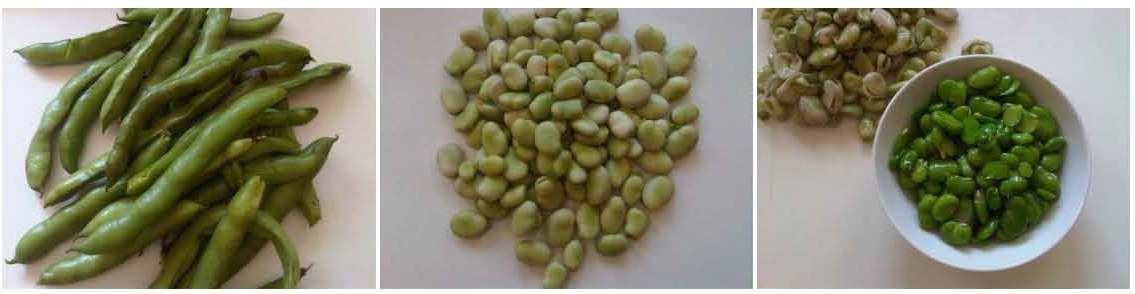
Once I picked the beans, I shelled them and then boiled them for three minutes to remove the coats. After plunging them in cold water, I squeezed them out of the coats and into a bowl. Although some recipes use the beans at this state – and they are soft enough to eat with a buttery texture – I like to cook them further.  This summer we have put them in paella (and let them cook with the arroz) and I have also sauteed them with garlic and also with prosciutto.

Fava beans first need to be peeled to remove the pod, then boiled to remove their coats.

Judging by all the liver comments I get from my friends, most people are only familiar with favas in a “Silence of the Lambs” context. Based on my success with them in the garden, in the kitchen and because even my kids eat them, they will become one of our garden staples. Next experiment: growing them over the winter.

In other news, I went to the nursery today with my assistants and we bought ourselves some ladybugs which we are going to release tonight….

PS – It’s a good thing that I tied up most of the fava beans because last night one of my assistants told me he was going to “add some moisture” to the garden in anticipation of releasing the ladybugs. At the time, I asked him to water the fava beans as I noticed that the soil was very dry, but I should have been more specific about what that meant: based on the number of leaves that were torn off the plants I think he “washed” the beans using the “Jet” setting.

Posted in Uncategorized | Tagged , , | Leave a comment

Saskatoon berries: the taste of summer

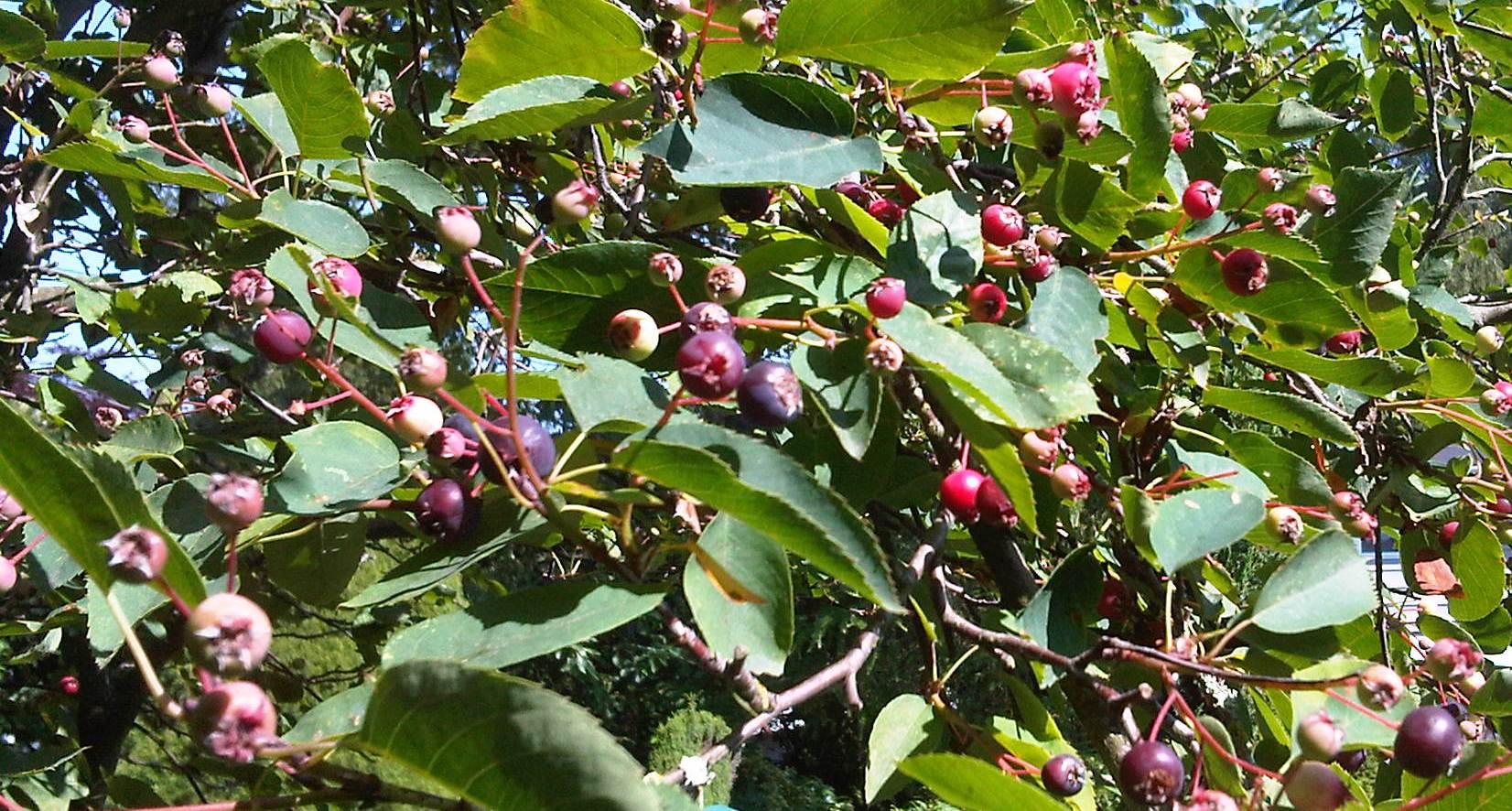
Our Saskatoon berry tree in the back yard has been producing for years, but this is the first year that we’ve been able to pick and eat many of the berries. Since most of the berries are still far out of arms reach, most still belong to the birds.

I love the taste and texture of the individual berries. The best way to eat them is to put a whole handful of ripe ones in your mouth at one time. So far this summer I have enjoyed several big handfuls of berries, and each time the taste has triggered memories of picking Saskatoon berries when I was small, near Charlie Lake, BC.

Late this afternoon I went to pick raspberries and I ended up doing the same thing: eating big handfuls of ripe berries. For me, the thing I like best about my garden is being able to pick and eat as many berries as I can. The evergreen blueberries are starting to ripen as well – this is the first year I have noticed the berries on those bushes probably because I spend so much time in that part of the yard weeding.

……………………

Today featured a weeding marathon and I managed to cover much of the front yard. In addition, I planted some lettuce (cos, rouge d’hiver, freckles) at the end of the lettuce box. The lunar calendar indicates that July 23-26 are good dates to plant, so lets hope it is right.

I staked the fava beans to the bean poles. Although favas don’t wrap themselves around the poles, now that the beans are starting to mature, the plants are starting to fall over because of the weight.

Finally, I added some bean poles to the beans. That bed has a mix of both bush and pole beans and they are finally starting to flower.

Picked a mix of lettuce for dinner and picked some chard and as much kale as I could for tomorrow’s dinner (not much). The romaine is getting bitter, which means that the lettuce is about to bolt.

Posted in Uncategorized | Tagged , , , | Leave a comment

Getting dirty

In a previous blog I think I mentioned the difference between regular gardening and “Man Gardening”. The resident expert once explained to me that “Man Gardening” is all about dirt, rocks and bark, which usually means cutting things down, cutting things off (pruning), moving things around and building things (like the shade garden).

Last weekend the resident expert bought a huge truck load of soil and moved it into the back yard. Some of the beds at the front still need a bit more dirt, but most of it will go into the rock garden. This year, like never before, the rock garden has been invaded by many types of weeds and grasses.We have a fabulous squirrel-proof bird feeder (a gift from Mr. and Mrs. Mooks) in the middle of the rock garden, so many of the grasses are from the seeds that have sprouted.

Anyway, I have been to pull up the grass and with it comes large chunks of dirt. In the last few weeks  enthusiastic weeding activities have started to denude the rock garden, so hopefully this will remedy the situation.

Posted in Uncategorized | Tagged , | Leave a comment

Suspiciously slow potatoes…..

Maybe it’s the lack of sun, but the potatoes plants don’t have much mojo. The plants are small and quite pale, they are growing slowly, and the leaves are full of holes. One of my friends pointed out that since potatoes, members of the nightshade family, have few pests, whatever is eating them above ground is probably also eating them below ground.

In contrast, the fava forest is out of control, and the fava beans are starting to ripen. I picked an entire bucket of the beans this morning and shelled them. I  have about five cups of beans, which I need to boil again to remove the shells.

Also, I need to add supports to the bush beans which are starting to flower.

Everything I planted has been growing in the heat – the zucchini, cilantro and dill.  The basil all sprouted in three days, but each day more and more of the sprouts are gone.

Looking forward to my big “Farming Staycation” two weeks from now.

Posted in Uncategorized | Tagged , | Leave a comment

Apples are ripening

The apples on the tree at the back are starting to get bigger and becoming slightly pink. We seemed to have a very high rate of fertilization this year, and some of the branches have up to eight apples per clump.  I think I was supposed to manually reduce the numbers a few weeks ago, but I didn’t and tree seems to be doing this naturally. Or else maybe the racoons are shaking them loose. Every morning there are about 10 – 15 unripe hard little apples in the grass and I am trying to pick them up daily so that they don’t rot or attract more rodents.

Raspberry picking is also a daily activity. Many are eaten fresh, but I am managing to freeze some for future domestic experiments. The berries have reached their peak and there are no more flowers on the canes, just ripening berries. Next years canes are already up and starting to get in the way, so last night I tied some of the biggest ones back so that they won’t get trampled and broken by my assistants.

Last night my nephew ate about 100000 raspberries and then threw up. This morning while I was picking them, I noticed that the South side of the patch was totally stripped of berries – even the small hard green ones had been eaten!  Too funny!

Posted in Uncategorized | Tagged , , , | Leave a comment